Muutke küpsiste eelistusi

E-raamat: Stamps on Terra Sigillata Found in Excavations of the Theatre of Aptera

Teised raamatud teemal:
  • Formaat - PDF+DRM
  • Hind: 17,68 €*
  • * hind on lõplik, st. muud allahindlused enam ei rakendu
  • Lisa ostukorvi
  • Lisa soovinimekirja
  • See e-raamat on mõeldud ainult isiklikuks kasutamiseks. E-raamatuid ei saa tagastada.
Teised raamatud teemal:

DRM piirangud

  • Kopeerimine (copy/paste):

    ei ole lubatud

  • Printimine:

    ei ole lubatud

  • Kasutamine:

    Digitaalõiguste kaitse (DRM)
    Kirjastus on väljastanud selle e-raamatu krüpteeritud kujul, mis tähendab, et selle lugemiseks peate installeerima spetsiaalse tarkvara. Samuti peate looma endale  Adobe ID Rohkem infot siin. E-raamatut saab lugeda 1 kasutaja ning alla laadida kuni 6'de seadmesse (kõik autoriseeritud sama Adobe ID-ga).

    Vajalik tarkvara
    Mobiilsetes seadmetes (telefon või tahvelarvuti) lugemiseks peate installeerima selle tasuta rakenduse: PocketBook Reader (iOS / Android)

    PC või Mac seadmes lugemiseks peate installima Adobe Digital Editionsi (Seeon tasuta rakendus spetsiaalselt e-raamatute lugemiseks. Seda ei tohi segamini ajada Adober Reader'iga, mis tõenäoliselt on juba teie arvutisse installeeritud )

    Seda e-raamatut ei saa lugeda Amazon Kindle's. 

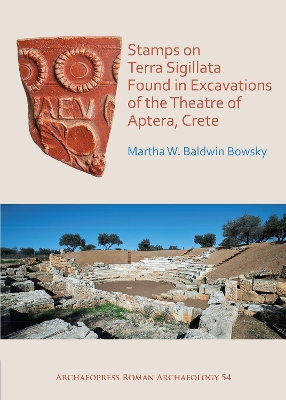
Stamps on Terra Sigillata Found in Excavations of the Theatre of Aptera, Crete presents a group of stamped fragments of Italian and eastern sigillata found in excavations of the theatre of Aptera (Crete). A total of 258 stamped sherds have been discovered and identified: 28 already published by the author and another 230 included here. Aptera now yields more stamped fragments of terra sigillata than any other Cretan city to date, including Knossos.


The sigillata stamps from the theatre of Aptera can be analysed so as to address a series of fundamental questions. Three of these constitute traditional uses of the evidence available from an analysis of terra sigillata: which potters supplied the theatre of Aptera and its environs; where these potters were active; when these potters were active and therefore what production centres supplied the theatre and its area over time. Two questions go further, in an effort to take advantage of this kind of materials ability to testify to patterns of contact and exchange, as well as to details of life within the Roman imperial system: what distribution patterns might have brought terra sigillata to the theatre and its vicinity; and whether we can suggest how terra sigillata was consumed in Apteras theatre and its environs.


Apteras theatre was a venue not only for performances but also for drinking, eating, and serving by the theatre-goers, spectators, actors and other performers. These activities took place during a period of prosperity for Roman Aptera in the first and second centuries, a period that coincides nicely with the production and distribution of terra sigillata. The people of Aptera and the surrounding area took full advantage of Cretes strategic position amid crossroads of transit and exchange as well as integration into the Roman economy, to display their prosperity and status in public and in private.

Arvustused

'Issues with this work are few  a testament to the thorough and precise research of Baldwin Bowsky. [ ] The publication of the stamped sigillata from Aptera expands this knowledge, especially for the role played by the city in trade networks both on and off the island.' -- Jane Francis * American Journal of Archaeology *

Introduction
Analysis of the material
1. Which potters supplied the theatre of Aptera and its environs?
2. Where were the potters who supplied the theatre of Aptera and its environs
active?
3. When were these potters active and therefore what production centres
supplied the theatre of Aptera and its area, over time?
4. What distribution patterns might have brought Italian sigillata to the
theatre of Aptera and its environs?
5. How was Italian Sigillata consumed at and around the theatre of Aptera?
Catalogue
Appendix 1: Stamps from Apteras theatre already published
Appendix 2: Potters attested from Apteras theatre
Works cited
Martha W. Baldwin Bowsky is a Professor Emerita of Classical Studies, retired from the University of the Pacific in Stockton, California; she now lives and pursues research from a base in High Point, North Carolina.