Muutke küpsiste eelistusi

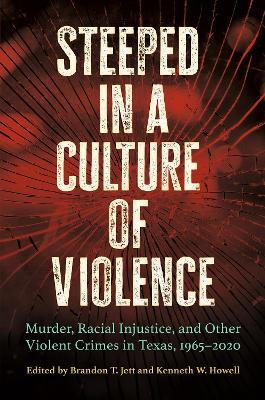
E-raamat: Steeped in a Culture of Violence: Murder, Racial Injustice, and Other Violent Crimes in Texas, 1965-2020

Edited by , Edited by
  • Formaat - PDF+DRM
  • Hind: 22,10 €*
  • * hind on lõplik, st. muud allahindlused enam ei rakendu
  • Lisa ostukorvi
  • Lisa soovinimekirja
  • See e-raamat on mõeldud ainult isiklikuks kasutamiseks. E-raamatuid ei saa tagastada.

DRM piirangud

  • Kopeerimine (copy/paste):

    ei ole lubatud

  • Printimine:

    ei ole lubatud

  • Kasutamine:

    Digitaalõiguste kaitse (DRM)
    Kirjastus on väljastanud selle e-raamatu krüpteeritud kujul, mis tähendab, et selle lugemiseks peate installeerima spetsiaalse tarkvara. Samuti peate looma endale  Adobe ID Rohkem infot siin. E-raamatut saab lugeda 1 kasutaja ning alla laadida kuni 6'de seadmesse (kõik autoriseeritud sama Adobe ID-ga).

    Vajalik tarkvara
    Mobiilsetes seadmetes (telefon või tahvelarvuti) lugemiseks peate installeerima selle tasuta rakenduse: PocketBook Reader (iOS / Android)

    PC või Mac seadmes lugemiseks peate installima Adobe Digital Editionsi (Seeon tasuta rakendus spetsiaalselt e-raamatute lugemiseks. Seda ei tohi segamini ajada Adober Reader'iga, mis tõenäoliselt on juba teie arvutisse installeeritud )

    Seda e-raamatut ei saa lugeda Amazon Kindle's. 

"This collection of essays examines whether or not a culture of violence exists in modern Texas by examining trends associated with various types of violence within the state as well as the social and political responses to violent behaviors and events from 1965 to the present. Texas history is steeped in brutality and bloodshed, including conflicts between Native American tribes (such as the Comanche and Apache), confrontations between European settlers and indigenous peoples, warfare, violence against slaves, personal feuds, extralegal activities commonly practiced during the late nineteenth and early twentieth century, labor strikes and riots, battles between segregationists and civil rights activists, and myriad other incidents. While scholars have argued that industrialization and economic changes coupled with the expansion of state institutions in the late nineteenth and twentieth centuries have worked to reduce the frequency and acceptance of violence, recent evidence indicates that the general public does not agree, suggesting instead that a culture of violence has emerged, or perhaps persisted. Beginning with a broad introductory essay, the work proceeds in twelve chapters, each dealing with a specific form of violence. This important and timelycollection provides valuable context to discussions on violence in general while providing a close examination of whether or not a culture of violence exists in Texas in the modern era"--

The Texas shooting at Santa Fe High School on May 18, 2018, which killed ten and injured thirteen, prompted public debate over the causes and potential solutions to this type of violent episode. On May 21, 2018, National Rifle Association president Oliver North declared that a culture of violence is largely responsible for these killings. “The problem that we’ve got is we’re trying like the dickens to treat the symptom without treating the disease. . . . The disease is youngsters who are steeped in a culture of violence.” This debate has captivated the American media and general public for decades.
Texas history is steeped in brutality and bloodshed, creating a narrative that these conditions are still a vital part of the state’s culture in the twenty-first century. But perceptions of violence are often at odds with realities on the ground. Over several centuries, violence has decreased with the development of modern society, but popular perception seems to be that a culture of violence has emerged, and perhaps persisted despite demographic, economic, cultural, and political shifts in Texas.
Starting from the notion that a culture of violence existed historically in the state and asking if such a culture still persists in modern Texas, this collection of essays examines trends associated with various types of violence within the state as well as social and political responses from 1965 to 2020. This important and timely work provides valuable context for discussions on violence in the past and for the future.

Arvustused

Steeped in a Culture of Violence is an important contribution to the interdisciplinary study of murder and racial violence in recent Texas history. The various chapters cover a wide range of violent crime and help unpack why certain types of violence are so much more frequent in Texas than in other parts of the industrialized world. Highly recommended."William D. Carrigan, author of Forgotten Dead: Mob Violence against Mexicans in the United States, 1848-1928

Acknowledgments ix
Editor's Note xi
Introduction: Violence in Texas History 1(26)
Brandon T. Jett
Kenneth W. Howell
Chapter 1 Homicide in Modern Texas
27(6)
Jeffrey L. Littlejohn
Chapter 2 Intimate Partner Violence in Texas
33(45)
Ashley Baggett
Chapter 3 Fighting the Killing Trail: LGBTQ Activism and the Hate Crime Epidemic in Texas
78(25)
Christopher P. Haight
Chapter 4 "Those Boys Didn't Learn to Hate Here": Racial Violence in Texas 1965 to 2020
103(37)
Betsy Friauf
Michael Phillips
Chapter 5 Gang Violence in Texas: Urban Dynamics over Time
140(26)
Mike Tapia
Chapter 6 Violence in Texas Prisons
166(21)
Mitchel P. Roth
Chapter 7 Beyond the Gun: A Brief Examination of Mass Shootings in Texas
187(54)
Kenneth W. Howell
Selected Bibliography 241(12)
Contributors 253(4)
Index 257
Brandon T. Jett is a professor of history at Florida SouthWestern State College. He is the author of Race, Crime, and Policing in the Jim Crow South: African Americans and Law Enforcement in Birmingham, Memphis, and New Orleans, 19201945.

Kenneth W. Howell is a professor of history at Blinn College and the author of Texas Confederate, Reconstruction Governor: James Webb Throckmorton and editor of The Seventh Star of the Confederacy: Texas during the Civil War and coeditor of Single Star of the West: The Republic of Texas, 18361845.