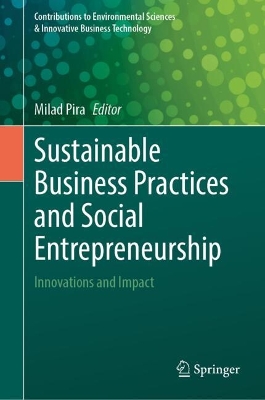
This book explores the transformative power of sustainability and social entrepreneurship in modern business. The volume comprehensively presents how businesses can integrate sustainable practices and social innovation to drive economic growth, enhance social equity, and protect the environment. In addition, the book shows how to balance profitability with social and environmental responsibility through real-world case studies, practical tools, and forward-looking insights. The volume is a valuable resource for business professionals, academics, policymakers, and sustainability practitioners, and it offers actionable strategies and frameworks for creating long-term value. The book addresses the future of business, where sustainability and social entrepreneurship are not just trends, but essential components of successful and resilient enterprises.
Chapter
1. Theoretical Foundations of Sustainability and Social
Entrepreneurship.
Chapter
2. Applying Gandhian Ethical Framework to Business
Pedagogy and Research.
Chapter
3. Ethical Accreditation in Australian
Fashion Social Enterprise.
Chapter
4. How Entrepreneurs Beliefs in
Sustainability and Climate Change Influence their Resilience.- chapter
5.
Circular Economy in Practice: Comparative Insights from the Apparel and
Coffee Shop Industries.
Chapter
6. Canadian women tourism social
entrepreneurs and their contributions to advancing sustainability.
Chapter
7. Measuring Sustainability Impact.
Chapter
8. Proximate, Portable, and
Preparatory: Non-monetary performance measures for social enterprises working
with transitory populations.
Chapter
9. Sustainability Never Tasted So
Sweet: The Use of True Cost Accounting in the Chocolate Industry.
Chapter
10. The Role of Local Institutions in Empowering Social Entrepreneurship:
Enabling Community Capital.
Chapter
11. Policy and Ecosystem Support for
Social Entrepreneurship Use of Public-Private Partnerships (P3s).
Chapter
12. The Bifurcation of Social Entrepreneurship Ecosystems in Thailand.-
Chapter
13. Uncertainty in Sustainable Entrepreneurship.
Milad Pira is an assistant professor at California State University, Bakersfield (CSUB), where he focuses on the intersection of business and society, social entrepreneurship, sustainability, and corporate social responsibility (CSR). He has extensive experience working with local communities, non-governmental organizations (NGOs), and governmental bodies to promote sustainable business practices and social innovation. His research interests include the development and implementation of sustainable business models, the role of social entrepreneurship in driving societal change, and the integration of CSR into corporate strategies. He has contributed to numerous academic publications and conferences, sharing his insights on how businesses can balance profitability with social and environmental responsibility.

 Lisainfo e-raamatute kohta