Muutke küpsiste eelistusi

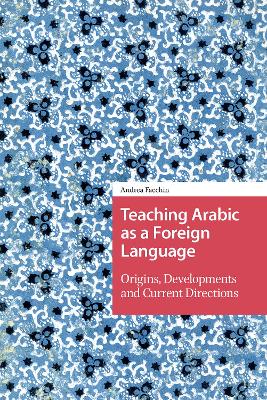
E-raamat: Teaching Arabic as a Foreign Language: Origins, Developments and Current Directions

  • Formaat: EPUB+DRM
  • Ilmumisaeg: 01-Oct-2025
  • Kirjastus: Amsterdam University Press
  • Keel: eng
  • ISBN-13: 9781040797082
Teised raamatud teemal:
  • Formaat - EPUB+DRM
  • Hind: 59,79 €*
  • * hind on lõplik, st. muud allahindlused enam ei rakendu
  • Lisa ostukorvi
  • Lisa soovinimekirja
  • See e-raamat on mõeldud ainult isiklikuks kasutamiseks. E-raamatuid ei saa tagastada.
  • Formaat: EPUB+DRM
  • Ilmumisaeg: 01-Oct-2025
  • Kirjastus: Amsterdam University Press
  • Keel: eng
  • ISBN-13: 9781040797082
Teised raamatud teemal:

DRM piirangud

  • Kopeerimine (copy/paste):

    ei ole lubatud

  • Printimine:

    ei ole lubatud

  • Kasutamine:

    Digitaalõiguste kaitse (DRM)
    Kirjastus on väljastanud selle e-raamatu krüpteeritud kujul, mis tähendab, et selle lugemiseks peate installeerima spetsiaalse tarkvara. Samuti peate looma endale  Adobe ID Rohkem infot siin. E-raamatut saab lugeda 1 kasutaja ning alla laadida kuni 6'de seadmesse (kõik autoriseeritud sama Adobe ID-ga).

    Vajalik tarkvara
    Mobiilsetes seadmetes (telefon või tahvelarvuti) lugemiseks peate installeerima selle tasuta rakenduse: PocketBook Reader (iOS / Android)

    PC või Mac seadmes lugemiseks peate installima Adobe Digital Editionsi (Seeon tasuta rakendus spetsiaalselt e-raamatute lugemiseks. Seda ei tohi segamini ajada Adober Reader'iga, mis tõenäoliselt on juba teie arvutisse installeeritud )

    Seda e-raamatut ei saa lugeda Amazon Kindle's. 

The study concentrates on the origins, developments and current directions of the discipline called Teaching Arabic as a Foreign Language (TAFL) within the Arab world and partially outside of it during the last sixty years, namely between 1958 and 2018. The most influential scholars, authors, educators and those significant works that contributed to the development of the discipline are taken into account. In addition, special attention is paid to the TAFL institutes, which are considered as epicenters of the activities and that hosted important meetings, allowing scholars to gather around the same table and discuss approaches, trends and methods used in the field of TAFL. All these aspects converge in one comprehensive research, which is enriched by the narration of the main socio-political changes that affected the Middle Eastern region recent history.
Acknowledgments 7(1)
Transliteration 8(2)
List of Abbreviations
9(1)
Arab World Map 10(1)
Introduction 11(14)
Genesis of the Research
16(1)
Research Questions
17(3)
Methodology
20(1)
Arrangement of the Present Study
21(4)
1 The Historical Background
25(22)
The `Early Period'
27(6)
The Colonial Period
33(6)
Open Doors
39(8)
2 The Birth of a New Branch
47(14)
3 Growth (1970s)
61(26)
Terminology
68(1)
Methods
69(3)
Broader Debates
72(15)
4 Development (1980s)
87(36)
Broader Debates
95(3)
Methods
98(5)
Terminology
103(1)
Scholarly Production
104(19)
5 New Challenges (1990s)
123(38)
Terminology
130(1)
Broader Debates
130(7)
Methods
137(8)
Scholarly Production
145(16)
6 In the Twenty-first Century (2000-2010)
161(36)
Broader Debates
167(9)
Methods
176(8)
Scholarly Production
184(13)
7 The Present Period
197(54)
Broader Debates
202(9)
Methods
211(5)
Scholarly Production
216(11)
Conclusions
227(10)
List of Events
237(6)
A TAFL Who's Who (1958-2018)
243(6)
TAFL Institutes (1958-2018)
249(2)
Tables
251(8)
On the Approaches of Teaching Arabic as a Foreign Language in Short
251(1)
The Direct Method
252(1)
The Traditional Method
253(1)
The Grammar-Translation Method
253(1)
The Phonetic Method
254(1)
The Whole-Word Method
254(1)
The Aural-Oral Orientation
255(1)
Structuro-Global Audio-Visual (SGAV) Method
255(1)
Bourguiba School Method
256(1)
Eclectic Method
256(1)
Communicative Approach
257(1)
Learner-Centered Orientation
257(1)
The Integrated Approach
258(1)
Bibliography 259(46)
Index 305
Andrea Facchin is researcher of Arabic language at Ca Foscari University of Venice. He holds his PhD from the same university, where he is coordinator of DAR Laboratory. His research interests are Arabic language teaching, testing and intercultural communication.