Muutke küpsiste eelistusi

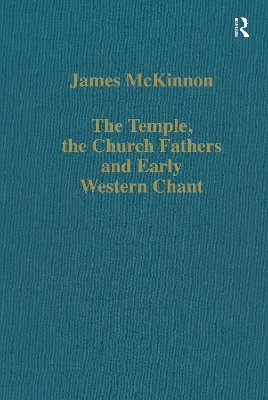
E-raamat: Temple, the Church Fathers and Early Western Chant

  • Formaat - EPUB+DRM
  • Hind: 51,99 €*
  • * hind on lõplik, st. muud allahindlused enam ei rakendu
  • Lisa ostukorvi
  • Lisa soovinimekirja
  • See e-raamat on mõeldud ainult isiklikuks kasutamiseks. E-raamatuid ei saa tagastada.
  • Raamatukogudele

DRM piirangud

  • Kopeerimine (copy/paste):

    ei ole lubatud

  • Printimine:

    ei ole lubatud

  • Kasutamine:

    Digitaalõiguste kaitse (DRM)
    Kirjastus on väljastanud selle e-raamatu krüpteeritud kujul, mis tähendab, et selle lugemiseks peate installeerima spetsiaalse tarkvara. Samuti peate looma endale  Adobe ID Rohkem infot siin. E-raamatut saab lugeda 1 kasutaja ning alla laadida kuni 6'de seadmesse (kõik autoriseeritud sama Adobe ID-ga).

    Vajalik tarkvara
    Mobiilsetes seadmetes (telefon või tahvelarvuti) lugemiseks peate installeerima selle tasuta rakenduse: PocketBook Reader (iOS / Android)

    PC või Mac seadmes lugemiseks peate installima Adobe Digital Editionsi (Seeon tasuta rakendus spetsiaalselt e-raamatute lugemiseks. Seda ei tohi segamini ajada Adober Reader'iga, mis tõenäoliselt on juba teie arvutisse installeeritud )

    Seda e-raamatut ei saa lugeda Amazon Kindle's. 

The articles here deal with liturgical music. Two topics receive special attention: the curiously negative role that musical instruments play in ancient cult music and the development of ecclesiastical song in early Christianity. The first series of articles treats classical Greek ethical notions of instruments, the status of instruments in Temple and Synagogue, and the absence of instruments from early Christian and medieval church music. The next parts trace the psalmody and hymnody of the Christian tradition, from its roots in Judaism to the origins of Gregorian chant in 7th-century Rome. Throughout, the writings of the Christian Church fathers such as Augustine, Ambrose, Basil and John Chrysostom underpin the authors analysis and presentation.

Arvustused

' ..if any journal arrives with an article by [ James McKinnon] , I turn to it first, knowing that he will deal with absolute clarity with matters that are often shrouded in hypotheses....An extremely useful compilation.' Early Music Review, No. 47 '...a serious student of either liturgical history or the early chant tradition will find this collection to be very valuable.' Worship, Vol. 73, No. 5 '...both knowledgeable and enjoyable...this is a good, solid, and intriguing book recommended to church musicians as well as to musical and church history enthusiasts who would like to delve deeper into provocative and fascinating questions.' Pastoral Music

Contents: Introduction; Jubal vel Pythagoras, quis sit inventor
musicae?; The A Capella Question: The rejection of the aulos in Classical
Greece; The exclusion of instruments from the ancient Synagogue; The meaning
of the patristic polemic against musical instruments; Musical instruments in
medieval psalm commentaries and psalters; The 10th-century organ at
Winchester; A capella doctrine versus practice: a necessary distinction; The
Psalmody of Jewish and Christian Antiquity: On the question of psalmody in
the ancient synagogue; The 4th-century origin of the gradual; Review of Aimée
Georges Martimort, Les lectures liturgiques et leurs livres; Desert
monasticism and the psalmodic movement of the 4th century; Preface to the
study of the Alleluia; Toward early Western Chant: Properization: the Roman
Mass; Lector chant versus schola chant: a question of historical
plausibility; Antoine Chavasse and the dating of early chant; Iconography:
The fifteen Temple steps and the gradual psalms; Index.
James McKinnon formerly University of North Carolina-Chapel Hill, USA