Muutke küpsiste eelistusi

E-raamat: Toll-Like Receptors: Practice and Methods

Edited by
  • Formaat - EPUB+DRM
  • Hind: 122,88 €*
  • * hind on lõplik, st. muud allahindlused enam ei rakendu
  • Lisa ostukorvi
  • Lisa soovinimekirja
  • See e-raamat on mõeldud ainult isiklikuks kasutamiseks. E-raamatuid ei saa tagastada.

DRM piirangud

  • Kopeerimine (copy/paste):

    ei ole lubatud

  • Printimine:

    ei ole lubatud

  • Kasutamine:

    Digitaalõiguste kaitse (DRM)
    Kirjastus on väljastanud selle e-raamatu krüpteeritud kujul, mis tähendab, et selle lugemiseks peate installeerima spetsiaalse tarkvara. Samuti peate looma endale  Adobe ID Rohkem infot siin. E-raamatut saab lugeda 1 kasutaja ning alla laadida kuni 6'de seadmesse (kõik autoriseeritud sama Adobe ID-ga).

    Vajalik tarkvara
    Mobiilsetes seadmetes (telefon või tahvelarvuti) lugemiseks peate installeerima selle tasuta rakenduse: PocketBook Reader (iOS / Android)

    PC või Mac seadmes lugemiseks peate installima Adobe Digital Editionsi (Seeon tasuta rakendus spetsiaalselt e-raamatute lugemiseks. Seda ei tohi segamini ajada Adober Reader'iga, mis tõenäoliselt on juba teie arvutisse installeeritud )

    Seda e-raamatut ei saa lugeda Amazon Kindle's. 

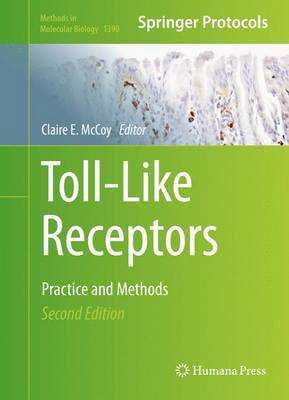
This second edition volume expands on the first edition with new developments on Toll-Like Receptors (TLRs) controlling events such as cross-priming of associated pattern recognition receptors, post-transcriptional regulation, interaction with other cellular and biologic systems, and cancer progression. This book is divided into five sections: Part I outlines methods for TLR detection, interaction, and intracellular trafficking; Part II describes methods and assays to investigate how TLRs cross-prime other pattern recognition receptors, including intracellular DNA receptors and inflammasome formation; Part III highlights RNA regulation, detailing how TLRs can induce RNA transcripts and molecules such as lncRNAs and microRNAs; Part IV explores TLR detection and activation in systems such as epithelial barrier function, metabolism and the circadian clock, as well as cellular systems including T and B lymphocytes; and Part V describes models to delineate the role of TLRs in diseases such as dermatitis, arthritis, and gastric cancer. Written in the highly successful Methods in Molecular Biology series format, each chapter contains a summary, a list of required materials, step-by-step, readily reproducible laboratory protocols, useful notes to investigate TLRs in cell culture, systems and disease, and tips on troubleshooting and avoiding known pitfalls.

Practical and cutting-edge, Toll-Like Receptors: Methods and Protocols, Second Edition is a valuable resource to any immunologist, molecular or medical biologist working in a laboratory setting. It will add skill to both students and the more advanced molecular biologist who wishes to learn a new technique or move to a different area within their current repertoire of practical knowledge.

Preface v
Contributors xi
Part I Toll-Like Receptor Detection and Activation
1 Toll-Like Receptors: Ligands, Cell-Based Models, and Readouts for Receptor Action
3(26)
Jennifer K. Dowling
Jerome Dellacasagrande
2 Bioinformatic Analysis of Toll-Like Receptor Sequences and Structures
29(12)
Tom P. Monie
Nicholas J. Gay
Monique Gangloff
3 Toll-Like Receptor Interactions Measured by Microscopic and Flow Cytometric FRET
41(24)
Gabor L. Horvath
Pia Langhoff
Eicke Latz
4 Using Confocal Microscopy to Investigate Intracellular Trafficking of Toll-Like Receptors
65(14)
Harald Husebye
Sarah L. Doyle
5 Assessing the Inhibitory Activity of Oligonucleotides on TLR7 Sensing
79(14)
Jonathan Ferrand
Michael P. Gantier
PART II TOLL-LIKE RECEPTOR CROSS-PRIMING OF ASSOCIATED RECEPTORS
6 Methods for Delivering DNA to Intracellular Receptors
93(14)
Katryn J. Stacey
Adi Idris
Vitaliya Sagulenko
Nazarii Vitak
David P. Sester
7 Detection of Interaction Between Toll-Like Receptors and Other Transmembrane Proteins by Co-immunoprecipitation Assay
107(14)
Yu-Ran Lee
Wondae Kang
You-Me Kim
8 Flow Cytometry-Based Bead-Binding Assay for Measuring Receptor Ligand Specificity
121(10)
Joris K. Sprokholt
Nina Hertoghs
Teunis B.H. Geijtenbeek
9 Measuring Monomer-to-Filament Transition of MAVS as an In Vitro Activity Assay for RIG-I-Like Receptors
131(14)
Bin Wu
Yu-San Huoh
Sun Hur
PART III Toll-Like Receptor Post-Transcriptional Regulation
10 Co-transcriptomic Analysis by UNA Sequencing to Simultaneously Measure Regulated Gene Expression in Host and Bacterial Pathogen
145(14)
Timothy Ravasi
Charalampos (Harris) Mavromatis
Nilesh J. Bokil
Mark A. Schembri
Matthew J. Sweet
11 Simple Methods to Investigate MicroRNA Induction in Response to Toll-Like Receptors
159(24)
Victoria G. Lyons
Claire E. McCoy
12 Determining the Function of Long Noncoding RNA in Innate Immunity
183(14)
Susan Carpenter
13 Analysis of Post-transcriptional Gene Regulation of Nod-Like Receptors via the 3'UTR
197(18)
Moritz Haneklaus
PART IV TOLL-LIKE RECEPTORS AND SYSTEM CONTROL
14 TLR Function in Murine CD4+ T Lymphocytes and Their Role in Inflammation
215(14)
Stephanie Flaherty
Joseph M. Reynolds
15 Analysis by Flow Cytometry of B-Cell Activation and Antibody Responses Induced by Toll-Like Receptors
229(20)
Egest J. Pone
16 Toll-Like Receptor-Dependent Immune Complex Activation of B Cells and Dendritic Cells
249(24)
Krishna L. Moody
Melissa B. Uccellini
Ana M. Avalos
Ann Marshak-Rothstein
Gregory A. Viglianti
17 Analysis of TLR-Induced Metabolic Changes in Dendritic Cells Using the Seahorse XFC96 Extracellular Flux Analyzer
273(14)
Leonard R. Pelgrom
Alwin J. van der Ham
Bart Everts
18 Toll-Like Receptor Signalling and the Control of Intestinal Barrier Function
287(14)
Daniel G.W. Johnston
Sinead C. Corr
19 Understanding the Role of Cellular Molecular Clocks in Controlling the Innate Immune Response
301(18)
Anne M. Curtis
Caio T. Fagundes
PART V TOLL-LIKE RECEPTORS AND DISEASE
20 Methods to Investigate the Role of Toll-Like Receptors in Allergic Contact Dermatitis
319(22)
Marc Schmidt
Matthias Goebeler
Stefan F. Martin
21 Allergens and Activation of the Toll-Like Receptor Response
341(10)
Tom P. Monte
Clare E. Bryant
22 Investigating the Role of Toll-Like Receptors in Models of Arthritis
351(32)
Anna M. Piccinini
Lynn Williams
Fiona E. McCann
Kim S. Midwood
23 Delineating the Role of Toll-Like Receptors in the Neuro-inflammation Model EAE
383(30)
Francesca Fallarino
Marco Gargaro
Giada Mondanell
Eric J. Downer
Md Jakir Hossain
Bruno Gran
24 The Use of MiRNA Antagonists in the Alleviation of Inflammatory Disorders
413(14)
Lucien P. Garo
Gopal Murugaiyan
25 Investigating the Role of Toll -Like Receptors in Mouse Models of Gastric Cancer
427(24)
Alison C. West
Brendan J. Jenkins
Index 451