Muutke küpsiste eelistusi

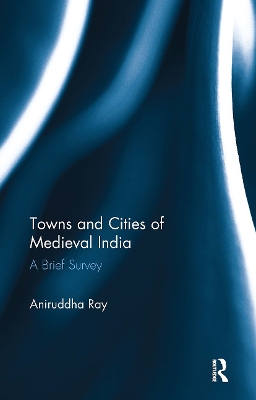
E-raamat: Towns and Cities of Medieval India: A Brief Survey

  • Formaat: PDF+DRM
  • Ilmumisaeg: 13-Sep-2016
  • Kirjastus: Routledge
  • Keel: eng
  • ISBN-13: 9781351997317
  • Formaat - PDF+DRM
  • Hind: 54,59 €*
  • * hind on lõplik, st. muud allahindlused enam ei rakendu
  • Lisa ostukorvi
  • Lisa soovinimekirja
  • See e-raamat on mõeldud ainult isiklikuks kasutamiseks. E-raamatuid ei saa tagastada.
  • Formaat: PDF+DRM
  • Ilmumisaeg: 13-Sep-2016
  • Kirjastus: Routledge
  • Keel: eng
  • ISBN-13: 9781351997317

DRM piirangud

  • Kopeerimine (copy/paste):

    ei ole lubatud

  • Printimine:

    ei ole lubatud

  • Kasutamine:

    Digitaalõiguste kaitse (DRM)
    Kirjastus on väljastanud selle e-raamatu krüpteeritud kujul, mis tähendab, et selle lugemiseks peate installeerima spetsiaalse tarkvara. Samuti peate looma endale  Adobe ID Rohkem infot siin. E-raamatut saab lugeda 1 kasutaja ning alla laadida kuni 6'de seadmesse (kõik autoriseeritud sama Adobe ID-ga).

    Vajalik tarkvara
    Mobiilsetes seadmetes (telefon või tahvelarvuti) lugemiseks peate installeerima selle tasuta rakenduse: PocketBook Reader (iOS / Android)

    PC või Mac seadmes lugemiseks peate installima Adobe Digital Editionsi (Seeon tasuta rakendus spetsiaalselt e-raamatute lugemiseks. Seda ei tohi segamini ajada Adober Reader'iga, mis tõenäoliselt on juba teie arvutisse installeeritud )

    Seda e-raamatut ei saa lugeda Amazon Kindle's. 

This much anticipated volume looks at the historical evolution of towns and cities in medieval India from the early thirteenth to the late eighteenth century. The selection is based on the availability of documents. These include the narratives of European travellers in English, French, Italian, Dutch, and German with the exception of Ibn Battuta in mid-fourteenth century and also Middle Bengali literature in case of towns in Bengal. While the coastal towns and cities have been looked at, the interior ones are also described on the basis of the writings of later historians and archaeologists.

Care has been taken to explain the rise, growth and the decline of some towns and cities in which the changing courses of rivers had played a crucial role. Attempts have been made to search other factors responsible for such eventualities. The delineation of physical features within the city has been given due emphasis including the different quarters of the city and the manners and customs of the local population with reference to craft production and commercial links. The morphological differences between the cities of eastern and those of the western or northern India have also been described. This is clear from the observations of port towns described here. All these would show that India was one of the most urbanized area in the medieval period before advent of the British.
Preface 9(4)
PART I
1 Introduction
13(21)
1.1 Urban Studies in the Past
13(2)
1.2 Urban Settlements in Pre-Medieval India
15(19)
2 Northern India
34(23)
2.1 Delhi of the Thirteenth and Fourteenth Centuries
34(19)
2.2 Rajasthan
53(4)
3 Gujarat
57(29)
3.1 Khambaj
57(13)
3.2 Champanir
70(6)
3.3 Ahmedabad
76(10)
4 Malwa and the Deccan
86(14)
4.1 Mandu
86(7)
4.2 Gulbarga
93(3)
4.3 Bidar
96(4)
5 Vijayanagar
100(27)
6 Goa
127(25)
7 Bengal
152(93)
7.1 Nadia
156(4)
7.2 Lakshmanavati
160(4)
7.3 Pandua
164(10)
7.4 Gaur
174(16)
7.5 Satgaon or Saptagram
190(20)
7.6 Sixteenth Century Nadia (NABADWIP)
210(8)
7.7 Three Towns in Coastal Bengal
218(27)
PART II THE MUGHALS
8 Agra
245(14)
9 Fatehpur Sikri
259(31)
10 Shahjahanabad (Delhi)
290(24)
11 Lahore
314(16)
12 Sirhind
330(4)
13 Surat
334(21)
14 Calicut
355(7)
15 Cochin
362(9)
16 Golconda
371(22)
17 Bijapur
393(7)
18 Burhanpur
400(9)
19 Patna
409(33)
20 Bengal
442(92)
20.1 Hughli
442(26)
20.2 Tanda and Rajmahal
468(7)
20.3 Dacca
475(17)
20.4 Qasimbazar-Murshidabad
492(24)
20.5 Burdwan
516(7)
20.6 Chittagong
523(11)
21 Denouement
534(17)
Bibliography 551(16)
Index 567
Aniruddha Ray studied at the Presidency College, Calcutta, India. In 1964 he left to conduct research at the University of Paris, Sorbonne and returned to Calcutta in 1967 with a Ph.D. degree. He joined the Department of Islamic History & Culture, Calcutta University in 1968 and retired in November 2001.