Muutke küpsiste eelistusi

E-raamat: Transforming the Countryside: The Electrification of Rural Britain

Edited by (University of Exeter, UK), Edited by (Leeds Trinity University, UK), Edited by (University of Reading, UK)
  • Formaat: EPUB+DRM
  • Sari: Rural Worlds
  • Ilmumisaeg: 25-Nov-2016
  • Kirjastus: Routledge
  • Keel: eng
  • ISBN-13: 9781317007500
  • Formaat - EPUB+DRM
  • Hind: 59,79 €*
  • * hind on lõplik, st. muud allahindlused enam ei rakendu
  • Lisa ostukorvi
  • Lisa soovinimekirja
  • See e-raamat on mõeldud ainult isiklikuks kasutamiseks. E-raamatuid ei saa tagastada.
  • Formaat: EPUB+DRM
  • Sari: Rural Worlds
  • Ilmumisaeg: 25-Nov-2016
  • Kirjastus: Routledge
  • Keel: eng
  • ISBN-13: 9781317007500

DRM piirangud

  • Kopeerimine (copy/paste):

    ei ole lubatud

  • Printimine:

    ei ole lubatud

  • Kasutamine:

    Digitaalõiguste kaitse (DRM)
    Kirjastus on väljastanud selle e-raamatu krüpteeritud kujul, mis tähendab, et selle lugemiseks peate installeerima spetsiaalse tarkvara. Samuti peate looma endale  Adobe ID Rohkem infot siin. E-raamatut saab lugeda 1 kasutaja ning alla laadida kuni 6'de seadmesse (kõik autoriseeritud sama Adobe ID-ga).

    Vajalik tarkvara
    Mobiilsetes seadmetes (telefon või tahvelarvuti) lugemiseks peate installeerima selle tasuta rakenduse: PocketBook Reader (iOS / Android)

    PC või Mac seadmes lugemiseks peate installima Adobe Digital Editionsi (Seeon tasuta rakendus spetsiaalselt e-raamatute lugemiseks. Seda ei tohi segamini ajada Adober Reader'iga, mis tõenäoliselt on juba teie arvutisse installeeritud )

    Seda e-raamatut ei saa lugeda Amazon Kindle's. 

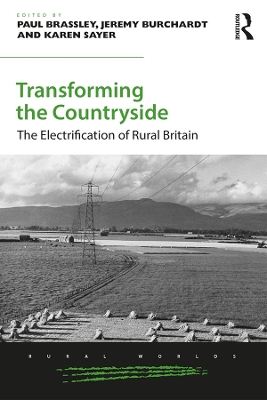
It is now almost impossible to conceive of life in western Europe, either in the towns or the countryside, without a reliable mains electricity supply. By 1938, two-thirds of rural dwellings had been connected to a centrally generated supply, but the majority of farms in Britain were not linked to the mains until sometime between 1950 and 1970. Given the significance of electricity for modern life, the difficulties of supplying it to isolated communities, and the parallels with current discussions over the provision of high-speed broadband connections, it is surprising that until now there has been little academic discussion of this vast and protracted undertaking. This book fills that gap. It is divided into three parts. The first, on the progress of electrification, explores the timing and extent of electrification in rural England, Wales and Scotland; the second examines the effects of electrification on rural life and the rural landscape; and the third makes comparisons over space and time, looking at electrification in Canada and Sweden and comparing electrification with the current problems of rural broadband.
List of figures
vii
List of tables
viii
Acknowledgements x
Contributors xi
1 Introduction
1(12)
Paul Brassley
Jeremy Burchardt
Karen Sayer
PART I The progress of electrification
13(102)
2 The electrification of the countryside: the interests of electrical enterprises and the rural population in England, 1888--1939
15(23)
Karl Ditt
3 Power to the people: power stations and the national grid
38(13)
John Sheail
4 Lighting the landscape: rural electrification in Wales
51(18)
Richard Moore-Colyer
5 The electrification of Highland Scotland
69(14)
David Fleetwood
6 Electrifying farms in England
83(32)
Paul Brassley
PART II The effects of electrification
115(40)
7 Electrification and its alternatives in the farmer's and labourer's home
117(18)
Karen Sayer
8 Pylons and frozen peas: the Women's Institute goes electric
135(20)
Rosemary Shirley
PART III Comparisons over space and time
155(91)
9 Rural electrification in Sweden: a comparison
157(21)
Carin Martiin
10 People, place and power: rural electrification in Canada, 1890--1950
178(27)
Ruth W. Sandwell
11 Rural broadband: a twenty-first-century comparison with electrification
205(16)
Martyn Warren
12 Conclusion: electricity, rurality and modernity
221(25)
Paul Brassley
Jeremy Burchardt
Karen Sayer
Index 246
Paul Brassley is a Visiting Research Fellow in the Land, Environment, Economics and Policy Institute, University of Exeter.


Jeremy Burchardt is Associate Professor in the Department of History, University of Reading.


Karen Sayer is Professor of Social and Cultural History, Leeds Trinity University.