Muutke küpsiste eelistusi

E-raamat: Virtue of Playfulness: Why Happy People Are Playful

(University of Louisville, USA)
  • Formaat - EPUB+DRM
  • Hind: 28,59 €*
  • * hind on lõplik, st. muud allahindlused enam ei rakendu
  • Lisa ostukorvi
  • Lisa soovinimekirja
  • See e-raamat on mõeldud ainult isiklikuks kasutamiseks. E-raamatuid ei saa tagastada.

DRM piirangud

  • Kopeerimine (copy/paste):

    ei ole lubatud

  • Printimine:

    ei ole lubatud

  • Kasutamine:

    Digitaalõiguste kaitse (DRM)
    Kirjastus on väljastanud selle e-raamatu krüpteeritud kujul, mis tähendab, et selle lugemiseks peate installeerima spetsiaalse tarkvara. Samuti peate looma endale  Adobe ID Rohkem infot siin. E-raamatut saab lugeda 1 kasutaja ning alla laadida kuni 6'de seadmesse (kõik autoriseeritud sama Adobe ID-ga).

    Vajalik tarkvara
    Mobiilsetes seadmetes (telefon või tahvelarvuti) lugemiseks peate installeerima selle tasuta rakenduse: PocketBook Reader (iOS / Android)

    PC või Mac seadmes lugemiseks peate installima Adobe Digital Editionsi (Seeon tasuta rakendus spetsiaalselt e-raamatute lugemiseks. Seda ei tohi segamini ajada Adober Reader'iga, mis tõenäoliselt on juba teie arvutisse installeeritud )

    Seda e-raamatut ei saa lugeda Amazon Kindle's. 

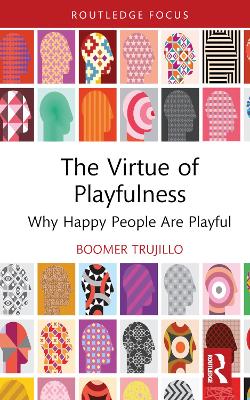
This book argues that in order for people to live well, they must develop a virtue of playfulness. Inspired by Aristotle, the book draws on work from philosophy, classics, history, biology, psychology, and media studies to understand the place of play and playfulness in a good life.


This book argues that in order for people to live well, they must develop a virtue of playfulness. Inspired by Aristotle, the book draws on work from philosophy, classics, history, biology, psychology, and media studies to understand the place of play and playfulness in a good life.

Many philosophers have written about play, from Presocratics such as Heraclitus to contemporary philosophers such as Bernard Suits. Some champion play as the most crucial value in life. Others deride it and warn strongly against it. This book evaluates the research for how play and playfulness bear on living a good life and becoming a good person. Its main argument is that in order to understand play as an action we must understand playfulness as a virtue in the lives of good people. The author develops a theory of playfulness from an Aristotelian perspective. Like Aristotle sees the virtues as necessary for a happy life, the author argues that playfulness is necessary for living well. And just as Aristotle offers multifaceted characterizations of core virtues, the author argues that playfulness includes aspects of seriousness, creativity, humility, optimism, and sociality. Playful people take play seriously, learn new skills, overcome failure, strive for success, and keep others in mind. As a result, playful people have a better shot at living well.

The Virtue of Playfulness is an accessible, empirically-informed, and detailed treatment of the philosophy of playfulness. It will appeal to scholars and students in philosophy and related disciplines who are interested in virtue ethics, moral psychology, philosophy of games, philosophy of sport, and ancient philosophy.

Arvustused

In this clear and fun to read book, boomer trujillo convincingly shows that playfulness is a virtue necessary for the good life. The Virtue of Playfulness is an important contribution to the growing work on the importance of play and its role in our lives.

Shawn E. Klein, Arizona State University, USA

This is a serious and scholarly consideration of the nature, virtue and importance of play and playfulness. trujillo provides an Aristotelian reading of play as part of a flourishing and worthwhile life and rightly concludes that life is best lived playfully.

Emily Ryall, University of Gloucestershire, UK

The Virtue of Playfulness is a timely, erudite, and compelling inquiry into the nature and importance of the virtue of playfulness. trujillo impressively and insightfully draws on work across the wide spectrum and deep history of philosophy, while deftly noting the scientific import of his claims. Despite the complexity of his subject and the breadth of his sources, trujillos writing is lucid, engaging, and frequently witty. At a time when philosophers are finally exploring play and its kin in more detailthrough the investigation of spontaneous freedom, games, volitional openness, and arttrujillos focus on playfulness as a virtue makes an exciting contribution.

Nick Riggle, The University of San Diego, USA

boomer trujillos book, The Virtue of Playfulness: Why Happy People Are Playful, is a must-read for anyone interested in playfulness, moral virtue, the good life, or simply human nature. For context, I am writing a book on the nature and value of playfulness myself, and I not only have read boomers wonderful book draft from cover to cover carefully twice, gleaning substantial new insights each time; I also have devoted the better part of a chapter to explaining why I disagree with him. I am sure I will read it from cover to cover again many more times; it richly repays careful study, and I plan to use it in my teaching. There can be no doubt that trujillos theory of playfulness is now the theory to beat. It is also written in a very accessible and engaging style, and I recommend it enthusiastically.

Michael Ridge, The University of Edinburgh, UK

We know that all work and no play makes Jack a dull boy, but too many philosophers have scorned play as time wasted, or else have valued it unreflectively as the mere absence of work. What if, instead, there are distinctive goods of play, and both mental and physical skills through which we can do a better or worse job of playing? This sounds paradoxical: doing a better job of playing? But boomer trujillos eudaimonistic account of the virtue of playfulness and its essential role in a good life approaches this challenge with wisdom and seriousness, effectively making the case that playfulness belongs in an Aristotelian system. trujillos appropriately light touch and lucid prose make this book an important contribution to the literature in eudaimonistic ethics, the philosophy of play, sport, and games, as well as an excellent introduction to virtue ethics for students at all levels.

Avery Kolers, The University of Louisville, USA

Introduction: Playfulness, Seriously
1. Aristotle on Play as Medicine
2. Aristotle on Being Happy, Virtuous, and (Maybe) Playful
3. Harmonizing the Cacophony of Claims about Play
4. The Virtue of Playfulness Conclusion: Happy People Play, Playful People Live

boomer trujillo is assistant professor at the University of Louisville, USA. His thought is captured in articles like The Friends of Sisyphus, Stoicism Sucks, The Benefits of Being a Suicidal Curmudgeon, and Friendship for the Flawed.