Muutke küpsiste eelistusi

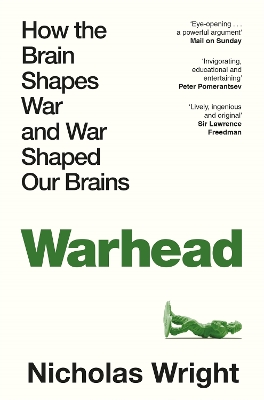
E-raamat: Warhead: How the Brain Shapes War and War Shaped Our Brains

  • Formaat: EPUB+DRM
  • Ilmumisaeg: 30-Oct-2025
  • Kirjastus: Pan Books
  • Keel: eng
  • ISBN-13: 9781035014019
  • Formaat - EPUB+DRM
  • Hind: 13,99 €*
  • * hind on lõplik, st. muud allahindlused enam ei rakendu
  • Lisa ostukorvi
  • Lisa soovinimekirja
  • See e-raamat on mõeldud ainult isiklikuks kasutamiseks. E-raamatuid ei saa tagastada.

DRM piirangud

  • Kopeerimine (copy/paste):

    ei ole lubatud

  • Printimine:

    ei ole lubatud

  • Kasutamine:

    Digitaalõiguste kaitse (DRM)
    Kirjastus on väljastanud selle e-raamatu krüpteeritud kujul, mis tähendab, et selle lugemiseks peate installeerima spetsiaalse tarkvara. Samuti peate looma endale  Adobe ID Rohkem infot siin. E-raamatut saab lugeda 1 kasutaja ning alla laadida kuni 6'de seadmesse (kõik autoriseeritud sama Adobe ID-ga).

    Vajalik tarkvara
    Mobiilsetes seadmetes (telefon või tahvelarvuti) lugemiseks peate installeerima selle tasuta rakenduse: PocketBook Reader (iOS / Android)

    PC või Mac seadmes lugemiseks peate installima Adobe Digital Editionsi (Seeon tasuta rakendus spetsiaalselt e-raamatute lugemiseks. Seda ei tohi segamini ajada Adober Reader'iga, mis tõenäoliselt on juba teie arvutisse installeeritud )

    Seda e-raamatut ei saa lugeda Amazon Kindle's. 

'Lively, ingenious and original' Sir Lawrence Freedman 'Eye-opening . . . a powerful argument' Mail on Sunday

Discover the new science behind warfare, from Dr Nicholas Wright, leading neuroscientist and adviser to the Pentagon.

Why did France lose to the Nazis, despite its defenders having more tanks, troops and guns? How did Ukraine repel Russias initial onslaught? How do you know if you can trust an ally? How can we make clearer decisions under pressure?

In Warhead, Nicholas Wright takes us on a fascinating journey through the brain to show us why, if we want to understand warfare, we must first look inside our own heads. Drawing on his work as a neuroscientist and over a decade spent advising the Pentagon and the UK government, he reveals how, whether we like it or not, the brain is wired for conflict in the office or on the battlefield.

With a unique framework that helps explain todays rising tensions and how to defuse them, Warhead brings cutting-edge research to life through stories from across history. What was it like for a foot soldier at the Battle of Waterloo in 1815? How did Shaka Zulu or Winston Churchill see through the fog of conflict, make better decisions and communicate with their troops? How will human conflict shape our future technologies?

In an increasingly dangerous world that threatens our values and success, Warhead is an essential read to understand why we fight, lose and win wars.

'A mind-expanding journey . . . invigorating, educational and entertaining' Peter Pomerantsev, author of How to Win an Information War

Arvustused

A mind-expanding journey through the literal war for our minds. Combines neuroscience, history and memoir in the best traditions of popular science and military history. Invigorating, educational and entertaining -- Peter Pomerantsev, Senior Fellow at Johns Hopkins University and award-winning author of How to Win an Information War and Nothing is True and Everything is Possible Eye-opening . . . Warhead is a powerful argument for a greater understanding of the way the brain shapes the nature of war in the past, the present and the future he predicts -- Nick Rennison, Mail on Sunday This remarkable book charts the living history of war and conflict, from what unfolds on the evening news to spellbinding examples from military history -- Karl Friston, Professor of Neuroscience at University College London Distinctive and fascinating . . . Nick Wright reminds us of the true importance of all the various brain functions, wherever they may be in the brain's hierarchy of function -- Chris Frith, Emeritus Professor of Neuropsychology at University College London, and author of Making up the Mind I learned a great deal from Nicholas Wrights unique book about how todays neuroscience can better explain the workings of the brain, and provide understanding of how our brains feed the roots of human conflict. Highly recommended -- Sir David Omand, Professor at the War Studies Department of Kings College London, and former Director of GCHQ This is a lively, ingenious and original book. Taking us on a journey through the distinctive parts of the brain, Nicholas Wright is able to make human behaviour during the extreme circumstances of war make more sense -- Sir Lawrence Freedman, Emeritus Professor of War Studies at Kings College London Truly original and (unfortunately) timely. Wright combines brain science, history and psychology to challenge our views on war and peace. Would understanding the mind help bring peace or help nations fight better? Perhaps both. Fresh, engaging and provocative -- Tali Sharot, award-winning author of The Influential Mind A fresh neuroscientific exploration of the science of war. Warhead is for anyone who thinks conflict is explained by cold reason and analysis, rather than by understanding our imperfect brains -- Beatrice Heuser, Distinguished Professor at the Free University of Brussels and author of Flawed Strategy: Why Smart Leaders Make Bad Decisions In the great canon of war literature you will search far and wide for an examination, accessible to all, that considers how the structure of the brain, its chemistry and processes, provides the key to understanding those violent events . . . But now we have Warhead -- Mark Urban, The Sunday Times An alarming insider account of how our brains influence conflict . . . Warhead presents an original angle with some illuminating insights -- New Scientist

Dr Nicholas Wright is a neuroscientist who researches the brain, technology and security at University College London, Georgetown University and the New America think tank in Washington, DC, where he also advises the Pentagon Joint Staff. On emerging technologies, he has worked with the White House, the UK Cabinet Office and the Australian prime ministers office. He has published more than twenty peer-reviewed research papers, many of which have been covered by the BBC and The New York Times. He has appeared on CNN and the BBC and regularly contributes to high-profile outlets like Foreign Affairs, Foreign Policy, The Atlantic and Slate. He is the author of Warhead.