Muutke küpsiste eelistusi

E-raamat: Water in North American Environmental History

  • Formaat - PDF+DRM
  • Hind: 51,99 €*
  • * hind on lõplik, st. muud allahindlused enam ei rakendu
  • Lisa ostukorvi
  • Lisa soovinimekirja
  • See e-raamat on mõeldud ainult isiklikuks kasutamiseks. E-raamatuid ei saa tagastada.

DRM piirangud

  • Kopeerimine (copy/paste):

    ei ole lubatud

  • Printimine:

    ei ole lubatud

  • Kasutamine:

    Digitaalõiguste kaitse (DRM)
    Kirjastus on väljastanud selle e-raamatu krüpteeritud kujul, mis tähendab, et selle lugemiseks peate installeerima spetsiaalse tarkvara. Samuti peate looma endale  Adobe ID Rohkem infot siin. E-raamatut saab lugeda 1 kasutaja ning alla laadida kuni 6'de seadmesse (kõik autoriseeritud sama Adobe ID-ga).

    Vajalik tarkvara
    Mobiilsetes seadmetes (telefon või tahvelarvuti) lugemiseks peate installeerima selle tasuta rakenduse: PocketBook Reader (iOS / Android)

    PC või Mac seadmes lugemiseks peate installima Adobe Digital Editionsi (Seeon tasuta rakendus spetsiaalselt e-raamatute lugemiseks. Seda ei tohi segamini ajada Adober Reader'iga, mis tõenäoliselt on juba teie arvutisse installeeritud )

    Seda e-raamatut ei saa lugeda Amazon Kindle's. 

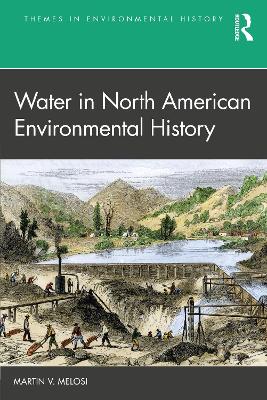
Water in North American Environmental History offers 25 cases studies that explore the range of uses and perceptions of water throughout Canadian, Mexican, and United States history.

Water has served a myriad of purposes historically as human sustenance, agricultural irrigation, sanitation, fire protection, military defense, power generation, transportation, and much more. Water and its uses provide an excellent entrée into the study of humans and the environment, not only because water is a vital resource for life, but also because water as a medium is so intimately woven into the everyday experiences of humans and into societys economic, political, and social fabric. A North American perspective is not representative of the worlds water use, but it is an area with a linked history and many overlapping human and environmental features and concerns. With a continental perspective, the book explores many disparate topics without being confined to the history and experiences of just one country. The chapters are short, but descriptive, and departure points for what they tell us about the human experience in dealing with water and the environmental implications of water use. The text leads students to consider water in relation to society, and to the past.

The book will be of interest to students of environmental history, geography, and the environmental sciences.

Arvustused

2022 John Lyman Book Award honorable mention in the category of "Naval and Maritime Science and Technology":

"Teachers offering classes on environmental history, especially of either water or North America, will want to consider adding this book to their syllabi. Alternatively, the book could help hurried and harried instructors who need to give a class lecture or two on topics that appear here. College and university libraries should add it to their collections."

J.R. McNeill, Georgetown University, USA in Environment and History

"There is no dearth of concepts, approaches and research fields in the book...so broad is the range of topics and actors that the book covers that there is nothing much left to be desired. The reader finds a great variety of water bodies, from rivers such as the Rio Grande and the Mississippi, and human infrastructural artefacts like the Spanish colonial irrigation channels (acequias), the Houston Ship Channel and the Erie Canal, to underground sources like the depleting Ogallala aquifer in Martin Melosis magnificent Water in North American History, the ubiquity, the significance, and the multi-faceted nature of waters ways are amazing."

Uwe Lübken, Official Journal of the International Water History Association

Acknowledgments x
Introduction 1(10)
PART I Indigenous Peoples Before Contact
11(30)
1 The Hohokam: "The Canal Builders" of the American Southwest
13(8)
2 The Aztecs and the Founding of Tenochtidan
21(9)
3 The Inuit, Sea Ice, and Snow
30(11)
PART II Colonialization and Early-Industrial Growth
41(32)
4 Acequias and Spanish Water Law
43(11)
5 The Origins of Commercial Fishing in Newfoundland
54(8)
6 From Waterwheels to Steam Engines
62(11)
PART III Expansionism and Western Settlement
73(22)
7 The California Gold Rush: Placer and Hydraulic Mining
75(11)
8 Capricious Border: The Rio Grande River
86(9)
PART IV Commerce, Industry, and Urban Growth
95(46)
9 Philadelphia's Waterworks: Pioneering Clean Water for Cities
99(10)
10 Water Rerouted: The Erie Canal
109(11)
11 Building the Toronto Waterfront
120(8)
12 The Lure of Falling Water: Niagara Falls
128(13)
PART V The Mid-Twentieth Century
141(34)
13 The Houston Ship Channel's Environmental Footprint
143(11)
14 "Levees-Only" in Louisiana and The Great Mississippi Flood
154(11)
15 Salmon, Hydropower, and the Fraser River
165(10)
PART VI The Postwar Years
175(38)
16 Racism and Civil Rights in American/Canadian Swimming Pools
177(9)
17 Detergent Phosphates in the Great Lakes
186(9)
18 The Fluoride Controversy
195(10)
19 Hurricane Hazel: In Canada
205(8)
PART VII The New Ecology
213(30)
20 Mexico's Ixtoc 1 Oil Spill
217(6)
21 The Ogallala Aquifer in Decline
223(11)
22 Water Management and Privatization in Modern Mexico
234(9)
PART VIII Social Crises/Environmental Injustices
243(36)
23 The Flint Water Crisis
247(11)
24 Maquiladoras and Water Pollution
258(10)
25 To Frack or Not to Frack in Mexico
268(11)
Postscript: Climate and Water 279(3)
Index 282
Martin V. Melosi is Cullen Professor Emeritus of History and Founding Director of the Center for Public History at the University of Houston, USA. He studies environmental and urban history and energy history.