Muutke küpsiste eelistusi

E-raamat: We Are Having This Conversation Now: The Times of AIDS Cultural Production

  • Formaat: PDF+DRM
  • Ilmumisaeg: 08-Aug-2022
  • Kirjastus: Duke University Press
  • Keel: eng
  • ISBN-13: 9781478023081
  • Formaat - PDF+DRM
  • Hind: 33,28 €*
  • * hind on lõplik, st. muud allahindlused enam ei rakendu
  • Lisa ostukorvi
  • Lisa soovinimekirja
  • See e-raamat on mõeldud ainult isiklikuks kasutamiseks. E-raamatuid ei saa tagastada.
  • Formaat: PDF+DRM
  • Ilmumisaeg: 08-Aug-2022
  • Kirjastus: Duke University Press
  • Keel: eng
  • ISBN-13: 9781478023081

DRM piirangud

  • Kopeerimine (copy/paste):

    ei ole lubatud

  • Printimine:

    ei ole lubatud

  • Kasutamine:

    Digitaalõiguste kaitse (DRM)
    Kirjastus on väljastanud selle e-raamatu krüpteeritud kujul, mis tähendab, et selle lugemiseks peate installeerima spetsiaalse tarkvara. Samuti peate looma endale  Adobe ID Rohkem infot siin. E-raamatut saab lugeda 1 kasutaja ning alla laadida kuni 6'de seadmesse (kõik autoriseeritud sama Adobe ID-ga).

    Vajalik tarkvara
    Mobiilsetes seadmetes (telefon või tahvelarvuti) lugemiseks peate installeerima selle tasuta rakenduse: PocketBook Reader (iOS / Android)

    PC või Mac seadmes lugemiseks peate installima Adobe Digital Editionsi (Seeon tasuta rakendus spetsiaalselt e-raamatute lugemiseks. Seda ei tohi segamini ajada Adober Reader'iga, mis tõenäoliselt on juba teie arvutisse installeeritud )

    Seda e-raamatut ei saa lugeda Amazon Kindle's. 

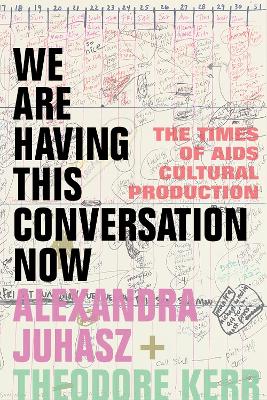
"In 2014, veteran HIV/AIDS activists and media makers Alexandra Juhasz and Theodore (Ted) Kerr noticed a resurgence of mainstream interest in representing white gay male experiences of "the AIDS crisis" of the 1980s and early 1990s. This plethora of representations followed a long silence around HIV/AIDS (which the authors call the Second Silence, the First Silence indicating the environment of fear, homophobia, and racism that characterized the pandemic's early days). In We Are Having This Conversation Now, Juhasz and Kerr center conversation as a crucial method for sharing intergenerational activist knowledge and honoring the robust media ecology that has always surrounded HIV/AIDS. Identifying what was missing from Crisis Revisitation films like Dallas Buyers Club and How to Survive a Plague-the foundation of collectivism, intersectionality and feminism that the AIDS movement was built on-Juhasz and Kerr seek to reintroduce these commitments as crucial frameworks for continued conversation about HIV/AIDS"--

We Are Having This Conversation Now offers a history, present, and future of AIDS through thirteen short conversations between Alexandra Juhasz and Theodore Kerr, scholars deeply embedded in HIV responses. They establish multiple timelines of the epidemic, offering six foundational periodizations of AIDS culture, tracing how attention to the crisis has waxed and waned from the 1980s to the present. They begin the book with a 1990 educational video produced by a Black health collective, using it to consider organizing intersectionally, theories of videotape, empowerment movements, and memorialization. This video is one of many powerful yet overlooked objects that the pair focus on through conversation to understand HIV across time. Along the way, they share their own artwork, activism, and stories of the epidemic. Their conversations illuminate the vital role personal experience, community, cultural production, and connection play in the creation of AIDS-related knowledge, archives, and social change. Throughout, Juhasz and Kerr invite readers to reflect and find ways to engage in their own AIDS-related culture and conversation.

Alexandra Juhasz and Theodore Kerr—two scholars deeply embedded in the HIV response—present the history, present, and future of AIDS through thirteen short conversations.

Arvustused

[ Juhaszs and Kerrs] conversational model-by definition friendly, curious, and inviting, with an interest in accessibility and transparency-distinguishes [ We Are Having This Conversation Now] from traditional academic writing and media criticism. Here, history-teaching and -learning is rooted in an oral history framework: that we learn what happened to communities from the people who constitute them.

- Svetlana Kitto (Bomb) We Are Having This Conversation Now carves a terrain of multimedia and citations. . . . [ Juhasz and Kerrs] push to talk about AIDS across temporalities is an effort to drag conversations around AIDS and AIDS cultural production into a public present and keep them there."

- Mackenzie Lukenbill (The Baffler) "We Are Having This Conversation Now is suffused with an awareness that the dominant narratives of AIDS in the United States have traditionally centered the lives of gay white men." - Alex Valenti (The Body)

Abbreviations  vii
Acknowledgments  ix
The Time of AIDS. Timeline 1  xiii
Introduction. We Are Starting This Conversation, Again  1
Section One. Trigger
Trigger
1. What We See  19
Trigger
2. Seeing Tape in Time   30
Trigger
3. Being Triggered Together  49
Trigger
4. Being Triggered in Times  59
Trigger
5. Being Triggered by Absence  73
Trigger
6. How to Have an AIDS Memorial in an Epidemic  83
An AIDS Conversation Script to be Read Aloud. Timeline 2  95
Section Two. Silence
7. Silence + Object  101
8. Silence + Art  121
9. Silence + Video  139
10. Silence + Undetectability  159
11. Silence + Conversation  169
12. Silence + Interaction  183
13. Silence + Transformation  197
Conclusion. We Are Beginning This Conversation, Again  217
Sources and Influences. Timeline 3  227
Notes  251
Index  257
Alexandra Juhasz is Distinguished Professor of Film at Brooklyn College, City University of New York, author of AIDS TV: Identity, Community, and Alternative Video, and coeditor of AIDS and the Distribution of Crises and Sisters in the Life: A History of Out African American Lesbian Media-Making, all also published by Duke University Press.

Theodore Kerr is a writer, organizer, artist, and Lecturer of Interdisciplinary Arts at The New School as well as a founding member of What Would an HIV Doula Do?