Muutke küpsiste eelistusi

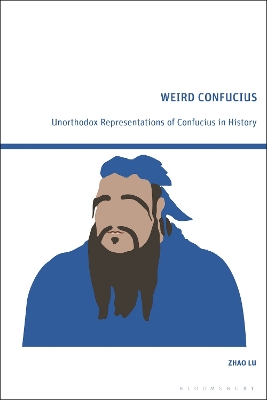
E-raamat: Weird Confucius: Unorthodox Representations of Confucius in History

(New York University Shanghai, China)
  • Formaat: 256 pages
  • Ilmumisaeg: 21-Mar-2024
  • Kirjastus: Bloomsbury Academic
  • Keel: eng
  • ISBN-13: 9781350327580
Teised raamatud teemal:
  • Formaat - EPUB+DRM
  • Hind: 33,92 €*
  • * hind on lõplik, st. muud allahindlused enam ei rakendu
  • Lisa ostukorvi
  • Lisa soovinimekirja
  • See e-raamat on mõeldud ainult isiklikuks kasutamiseks. E-raamatuid ei saa tagastada.
  • Formaat: 256 pages
  • Ilmumisaeg: 21-Mar-2024
  • Kirjastus: Bloomsbury Academic
  • Keel: eng
  • ISBN-13: 9781350327580
Teised raamatud teemal:

DRM piirangud

  • Kopeerimine (copy/paste):

    ei ole lubatud

  • Printimine:

    ei ole lubatud

  • Kasutamine:

    Digitaalõiguste kaitse (DRM)
    Kirjastus on väljastanud selle e-raamatu krüpteeritud kujul, mis tähendab, et selle lugemiseks peate installeerima spetsiaalse tarkvara. Samuti peate looma endale  Adobe ID Rohkem infot siin. E-raamatut saab lugeda 1 kasutaja ning alla laadida kuni 6'de seadmesse (kõik autoriseeritud sama Adobe ID-ga).

    Vajalik tarkvara
    Mobiilsetes seadmetes (telefon või tahvelarvuti) lugemiseks peate installeerima selle tasuta rakenduse: PocketBook Reader (iOS / Android)

    PC või Mac seadmes lugemiseks peate installima Adobe Digital Editionsi (Seeon tasuta rakendus spetsiaalselt e-raamatute lugemiseks. Seda ei tohi segamini ajada Adober Reader'iga, mis tõenäoliselt on juba teie arvutisse installeeritud )

    Seda e-raamatut ei saa lugeda Amazon Kindle's. 

Spanning antiquity until the present, Zhao Lu analyses the eclectic and fictitious representations of Confucius that have been widely celebrated by communities of people throughout history.

While mainstream scholarship mostly considers Confucius in terms of his role as a celebrated man of wisdom and as a teacher with a humanistic worldview, Zhao addresses the weirder representations. He considers depictions of Confucius as a prophet, a fortune-teller, a powerful demon hunter, a shrewd villain of 19th century American newspapers, an embodiment of feudal evils in the Cultural Revolution, and as a cute friend.

Zhao asks why some groups would risk contradicting the well-accepted image of Confucius with such representations and shows how these illustrations reflect the specific anxieties of these communities. He reveals not only how people across history perceived Confucius in diverse ways, but more importantly how they used Confucius in daily life, ranging from calming their anxiety about the future, to legitimizing a dynasty, stereotyping Chinese people, and even to forging a new sense of history.

Arvustused

Zhao Lu's pluralistic understanding of Confucius not only reveals the complexity of Chinese cultural history, but also the popularity of Confucius in various sectors of Chinese society. * Tze-ki Hon, Beijing Normal University, China * Iconoclasm abounds in this survey of representations of Confucius that depart from his familiar role as wise old philosopher. Was he a failed counselor? Or ghostbuster? Or a master of arcana? By showing us the range of non-standard representations of Confucius, Zhao Lu makes us question the standard ones, and how they became standard in the first place. * Paul R. Goldin, Professor of Chinese Thought, University of Pennsylvania, USA * Weird Confucius offers a comprehensive examination stand[ ing] as a seminal contribution to the field of ancient religious studies in China. This work significantly enriches the academic discourse deepens our understanding [ and] also provides critical insights into the broader dynamics of religious iconography and cultural memory. This scholarly work is indispensable a vital resource in the study of Chinese religious history. * Religion Book Reviews * Zhaos research adds a fresh perspective to contemporary Confucian Studies. * Religious Studies Review *

Muu info

Expands our narrow understanding of Confucius by exploring unorthodox, fictional representations of him from antiquity until the present, showing how they reflect contemporary human anxieties.

Introduction
Acknowledgments
1. Confucius as Prophet
2. Confucius as Ghostbuster
3. Confucius as Diviner
4. Confucius as Stereotype
5. Confucius as Villain
6. Confucius as Cute
Conclusion
Bibliography
Index
Zhao Lu is Assistant Professor of Global China Studies, New York University Shanghai, China.