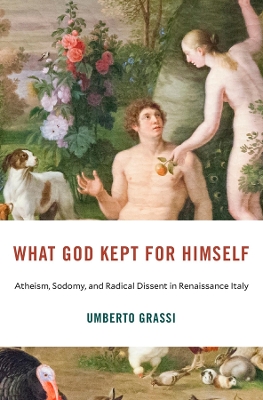
Ingeniousan enchanting reimagining of the history of atheism. * Publishers Weekly * This wide-ranging, fascinating, and provocative book explores the early modern history of radical unbelief. Considering the views of not only philosophers and theologians but also humble parish priests, laborers, and orphan girls, Grassi traces the belief that Adam and Eves original sin was actually sexual intercourseand according to some, specifically sodomy. In the process, he impressively restores the complexity of a largely hidden past of dissent and irreligiousness. -- Guido Ruggiero, author of Love and Sex in the Time of Plague A groundbreaking examination of early modern religious dissent. In this riveting book, Umberto Grassi delves into the radical belief that Adam and Eves disobedience involved an act of sodomy. Drawing on a rich array of sources, he illuminates how this profoundly subversive idea permeated both popular culture and learned libertine circles in early modern Italy and far beyond. A must-read. -- Konrad Eisenbichler, editor of Masculinities and Representation: The Eroticized Male in Early Modern Italy and England For the religious dissenters in this fascinating study, the forbidden fruit in the Garden of Eden was not an apple offered by a snake, but rather the buttocks, offered in an act that God had meant to keep for himself. Grassi traces this irreverent and radical idea among ordinary shopkeepers, learned philosophers, and even nuns, ultimately linking it to broader critiques of social hierarchies and church power. -- Merry E. Wiesner-Hanks, coeditor of The Cambridge World History of Sexualities This is a work of great erudition and imagination that ranges confidently from classical antiquity to the Enlightenment. Through meticulous research, Umberto Grassi has excavated numerous cases of individuals who held the shocking belief that the fall of Adam and Eve resulted from an act of sodomy committed in the Garden of Eden. Grassi makes a compelling argument that tropes of sexual nonconformity functioned as a form of radical religious dissent, one that ultimately contributed to the rise of early modern skepticism and unbelief. -- Eric R. Dursteler, author of Renegade Women: Gender, Identity, and Boundaries in the Early Modern Mediterranean

 Lisainfo e-raamatute kohta