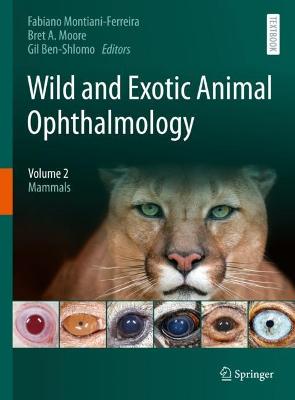
This Volume 2 of a two-volume work is the first textbook to offer a practical yet comprehensive approach to clinical ophthalmology in wild and exotic mammals. A phylogenetic approach is used to introduce the ecology and importance of vision across the entire diversity of mammal species before focusing on both the diverse aspects of comparative anatomy and clinical management of ocular disease from one animal group to the next. Edited by three of the most esteemed authorities in exotic animal ophthalmology, this two-volume work is separated into non-mammalian species (Volume 1: Invertebrates, Fishes, Amphibians, Reptiles, and Birds) and Mammals (Volume 2: Mammals).
Wild and Exotic Animal Ophthalmology, Volumes 1 and 2 is an essential collection for veterinary ophthalmologists and other veterinary practitioners working with wild and exotic animals.
Arvustused
This book comprises 579 pages and offers excellent overviews of wild and exotic animal ophthalmology. We highly recommend this book to be accessible for comparative vision scientists and clinical veterinarians, including general practitioners, wildlife and exotic specialists, and comparative ophthalmologists. The book should be useful for a wide variety of professionals in various domains, from beginners to experts, to provide essential knowledge and insights for anyone interested in animal vision or eye problems. (Kudratullah Kudratullah and Ikhsan Qodri Pramartaa, International Journal of Primatology, Vol. 44 (3), 2023)
General Introduction: Mammalia.- Ophthalmology of Monotremes: Platypus and Echidnas.- Ophthalmology of Marsupials: Opossums, Koalas, Kangaroos, Bandicoots, and Relatives.- Ophthalmology of Xenarthra: Armadillos, Anteaters, and Sloths.- Ophthalmology of Afrotheria: Aardvarks, Hyraxes, Elephants, Manatees, and Relatives.- Ophthalmology of Whippomorpha: Hippopotamuses, Whales, and Dolphins.- Ophthalmology of Ruminantia: Giraffe, Deer, Wildebeests, Gazelles, and Relatives.- Ophthalmology of Tylopoda: Camels, Alpacas, Llamas, Vicunas, and Guanacos.- Ophthalmology of Perissodactyla: Zebras, Tapirs, Rhinoceroses, and Relatives.- Ophthalmology of Felidae: Cats.- Ophthalmology of Canidae: Foxes, Wolves, and Relatives.- Ophthalmology of Ursidae: Bears.- Ophthalmology of Pinnipedimorpha: Seals, Sea Lions, and Walruses.- Ophthalmology of Mustelidae: Otters, Ferrets, Skunks, Raccoons, and Relatives.- Ophthalmology of Chiroptera: Bats.- Ophthalmology of Eulipotyphla: Moles, Shrews, Hedgehogs, and Relatives.- Ophthalmology of Lagomorpha: Rabbits, Hares, and Pikas.- Ophthalmology of Hystricomorpha: Porcupines, Guinea Pigs, Degus, Chinchillas, and Relatives.- Ophthalmology of Sciuromorpha: Squirrels, Prairie Dogs, and Relatives.- Ophthalmology of Castorimorpha: Beavers, Gophers, and Relatives.- Ophthalmology of Myodonta: Mice, Rats, Hamsters, Gerbils, and Relatives.- Ophthalmology of Primatomorpha: Lemurs, Tarsiers, Monkeys, Apes, and Relatives.
Dr. Fabiano Montiani-Ferreira is currently an Associate Professor of Comparative Ophthalmology at the Federal University of Paranį, Brazil (UFPR) where he teaches veterinary and graduate students and trains veterinary ophthalmology residents, since 1997. He completed the Senior Veterinary Student Program at The Animal Medical Center, New York, USA. He then obtained his Bachelor of Veterinary Medicine (BVetMed) and a Master of Science (MSc) degree in Veterinary Sciences from the same university (UFPR). In the early 2000´s, he obtained a Doctor of Philosophy (PhD) degree from Michigan State University (MSU). Dr. Montiani-Ferreira currently holds an official position and grant as a certified veterinary researcher (PQ2) at The Brazilian National Council for Scientific and Technological Development (CNPQ) and is a Diplomate of The Brazilian College of Veterinary Ophthalmologists (DBCVO). His research activities focus on: 1) Ocular morphology, physiology, clinical tests and visionin wild and exotic animals; 2) Investigations on animals carrying spontaneous mutations in small animals as models for the study of inherited retinal diseases in humans; 3) Nature and practice of science in addition to medical biostatistics. His clinical interests include: 1) Inherited retinal diseases in domestic and non-domestic animals; 2) Adapting established ophthalmic procedures for wild and exotic animals; 3) General ophthalmic surgery.
Dr. Bret A. Moore is currently an Assistant Professor of Comparative Ophthalmology at the University of Florida. He holds a Bachelor of Science in Neurobiology and Physiology (B.S.), Doctor of Veterinary Medicine (D.V.M.), and Doctor of Philosophy (Ph.D.) from Purdue University, and completed his postdoctoral training/residency in comparative veterinary ophthalmology at the University of California, Davis. His research occupies a unique niche that combines vision, visual ecology, and clinical ophthalmology. From an ecological perspective, his research asks questions that explore unknown or unexplained morphological and physiological adaptations in vision, and seeks to understand the role of multiple visual parameters simultaneously in order to better understand a given species visual space, importantly how visual systems align with behavior and enable success in respective ecological niches. Clinically, his research interests are focused on understanding disease processes as well as diagnostic and surgical methodology in exotic animal species. By taking this multifaceted approach to vision and clinical ophthalmology, and evaluating their interactions together, questions can be answered that not only bridge the gap across disciplines, but also become translatable to other disciplines such as conservation biology and the development of new biotechnologies.
Prof. Gil Ben-Shlomo (1970-2020) held DVM and PhD degrees from the Hebrew University of Jerusalem, Israel. Following a comparative ophthalmology residency at the University of Florida, he obtained board certification and Diplomate status in the American and European Colleges of Veterinary Ophthalmologists. His latest service was as faculty at the College of Veterinary Medicine, Cornell University, where he taught veterinary and graduate students and trained residents in the field of veterinary ophthalmology. He had been invited to speak at numerous local, national and international conferences. Prof. Ben-Shlomo was also an associate editor and author of Gelatts Veterinary Ophthalmology (6th edition), an editorial board member of the journal of Veterinary Ophthalmology and was the most recent President of the International Society of Veterinary Ophthalmology.

 Lisainfo e-raamatute kohta