Muutke küpsiste eelistusi
  • Formaat - EPUB+DRM
  • Hind: 31,19 €*
  • * hind on lõplik, st. muud allahindlused enam ei rakendu
  • Lisa ostukorvi
  • Lisa soovinimekirja
  • See e-raamat on mõeldud ainult isiklikuks kasutamiseks. E-raamatuid ei saa tagastada.
  • Raamatukogudele

DRM piirangud

  • Kopeerimine (copy/paste):

    ei ole lubatud

  • Printimine:

    ei ole lubatud

  • Kasutamine:

    Digitaalõiguste kaitse (DRM)
    Kirjastus on väljastanud selle e-raamatu krüpteeritud kujul, mis tähendab, et selle lugemiseks peate installeerima spetsiaalse tarkvara. Samuti peate looma endale  Adobe ID Rohkem infot siin. E-raamatut saab lugeda 1 kasutaja ning alla laadida kuni 6'de seadmesse (kõik autoriseeritud sama Adobe ID-ga).

    Vajalik tarkvara
    Mobiilsetes seadmetes (telefon või tahvelarvuti) lugemiseks peate installeerima selle tasuta rakenduse: PocketBook Reader (iOS / Android)

    PC või Mac seadmes lugemiseks peate installima Adobe Digital Editionsi (Seeon tasuta rakendus spetsiaalselt e-raamatute lugemiseks. Seda ei tohi segamini ajada Adober Reader'iga, mis tõenäoliselt on juba teie arvutisse installeeritud )

    Seda e-raamatut ei saa lugeda Amazon Kindle's. 

"This book focuses on the naming tradition among the Yoruba, one of Africa's largest ethnic groups, consisting of over 40 million people. Investigating the sociocultural significance of names in Yoruba society, the book shows how names act as distinctivemarkers, separating the Yoruba out from over 250 other ethnic groups in Nigeria. These names are not just labels, but affirmations of a shared identity and heritage. Names can serve as symbolic representations of a family's history, ancestral traditions,or significant events, thereby linking the bearers to their lineage. Based on extensive qualitative data from over 100 native speakers, the book shows how names can reflect joy, sorrow, or even political stances. The book goes on to consider how names are also used in non-human contexts, such as for naming places or pets. Overall, the book paints a rich picture of the social and cultural functions of Yoruba names, and how these functions affect the ways in which names are given, received, and perceived. Unprecedented in its in-depth and nuanced analysis of Yoruba naming practices, this book will be of interest to readers in African studies, sociology, anthropology, linguistics, cultural studies, gender studies, and history"-- Provided by publisher.

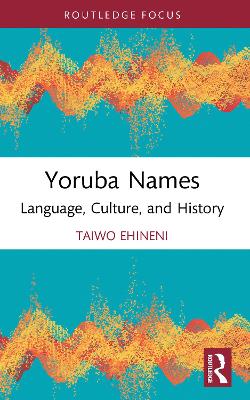
This book focuses on the naming tradition among the Yoruba, one of Africa’s largest ethnic groups, consisting of over 40 million people.


This book focuses on the naming tradition among the Yoruba, one of Africa’s largest ethnic groups, consisting of over 40 million people.

Investigating the sociocultural significance of names in Yoruba society, the book shows how names act as distinctive markers, separating the Yoruba out from over 250 other ethnic groups in Nigeria. These names are not just labels, but affirmations of a shared identity and heritage. Names can serve as symbolic representations of a family’s history, ancestral traditions, or significant events, thereby linking the bearers to their lineage. Based on extensive qualitative data from over 100 native speakers, the book shows how names can reflect joy, sorrow, or even political stances. The book goes on to consider how names are also used in non-human contexts, such as for naming places or pets. Overall, the book paints a rich picture of the social and cultural functions of Yoruba names, and how these functions affect the ways in which names are given, received, and perceived.

Unprecedented in its in-depth and nuanced analysis of Yoruba naming practices, this book will be of interest to readers in African studies, sociology, anthropology, linguistics, cultural studies, gender studies and history.

Arvustused

In exploring the philosophical, linguistic, and cultural contexts of the nature and meaning of names, Yoruba Names: Language, Culture, and History departs from extant referential approaches to names and embraces a culturally nuanced and historically informed perspective. Ehineni elucidates how the connectivity of names, the capacity of names to weave together and simultaneously tease out different dimensions of history, culture, and the social experience demonstrate that names are at the intersection of the linguistic and the cultural. Drawing from different disciplinary traditions, this book shows how Yoruba names compose and/or condense life, history, language, culture, and human (collective, familial, class, religious, individual) experiences. Yoruba Names is a thoughtful examination of the centrality of names and naming in cultural contexts and their implications for the production, performance, and contestation of meanings and the negotiation of human interactions

Wale Adebanwi, Presidential Penn Compact Professor of Africana Studies, University of Pennsylvania.

Professor Taiwo Ehinenis work on Yoruba anthroponyms is one of the most comprehensive scholarly works on African onomasiology. A linguist, linguistic anthropologist and ethnopragmaticist, Professor Ehineni painstakingly identifies, classifies, exemplifies and elucidates the semantic, semiotic, discursive mores and structural characteristics of Yoruba names and naming traditions. Among the Yoruba, one isnt just Ewàtómi Beauty is enough for me, one is beautiful! Thus, Yoruba anthroponyms construct the name-bearers. The names reflect, refract and blend into a web of knowledge that depicts an interlacing of language, ethnicity and identity. This book is highly recommended for linguists, anthropologists, sociologists and communication scholars. It is a treasure that will also benefit the general public/reader.

Samuel Obeng, D.Phil., FGA, Distinguished Professor of Linguistics, Indiana University, Bloomington.

Introduction: What's in a Name?

1. The Philosophy of a Name

2. Construct, Context, and Connections: The Semiotics of Yoruba Names

3. Naming as Act and Art: A Synthesis

4. Theorizing Names: Moving Beyond Western-Centric Models

Chapter 1: Yoruba Naming and Meaning

1. Introduction: The Cultural Weight of a Name

2. The Pragmatic Theory of Properhood (TPTP): A Critical Review

3. Meaning in Yoruba Names: Beyond Referentiality

*3.1 Denotation: Literal Meaning (Revisited)

*3.2 Connotation: Cultural and Historical Meanings

*3.3 Perspectivization: The Individual and Negotiated Meaning

*3.4.Subversion and Re-semanticization: Turning Meaning on its Head

4. Conclusion: Reconsidering the Nature of Meaning in Proper Names

Chapter 2: Personal Names: Constructing Identities and Narrating Social
Experiences

1. Introduction: Names as Sites of Identity Construction

2. The Naming Context Among the Yoruba: A Socio-Cultural Ritual

3. Factors Motivating the Choice of Names: A

*3.1 Family Situation or Parents Experiences

*3.2 Birth Circumstances

*3.3 Birth Order

*3.4 Sex

*3.5 Religion

*3.6 Profession

*3.7 Death Situation

4. Conclusion: Names as Dynamic Narratives of Self

Chapter 3: Oríkì: Praising Destiny, Constructing Identities in Yoruba
Culture

1. Introduction: Oríkì as a Cultural and Linguistic Phenomenon

2. The Concept of Orí: Foundations of Yoruba Identity and Destiny

3. Oríkì as a Verbal Instantiation of Orí: Performance and Power

4. Types of Oríkì: Exploring Specific Forms

* 4.1 Oríkì Àbís (Attributive Personal Praise Names)

* 4.2 Oríkì Orílé (Totemic Praise Names)

* 4.3 Oríkì Àlàjé (Praise Nicknames)

5. Conclusion: Reconsidering the Nature of Meaning in Proper Names

Chapter 4: Place Names: Language and History

1. Introduction: Place Names as Embodied Histories and Ecological Markers

2. Yoruba Toponyms: A Tapestry of History, Ecology, and Social Life

* 2.1 Flora Toponyms

* 2.2 Hill Toponyms

* 2.3 Hydro-Toponyms

* 2.4 Topographic-Color Descriptive Toponyms

* 2.5 Stone Toponyms and Forest Toponyms

* 2.6 War-related Toponyms

* 2.7 Agro-Toponyms

* 2.8 Place names based on environmental changes

3. Conclusion

Chapter 5: Pet Names: Language, Resistance, and Protest

1. Introduction: Naming as Resistance and Protest

2. The Yorubas and the Pet Culture

3. Pet Naming and Linguistic Creativity in Yoruba Culture: The Art of
Subversion

4. Yoruba Pet Names: Sites of Resistance and Social Commentary

* 4.1 Pet Names and Protest in Family Matters

* 4.2 Pet Names and Protest in Communal Situations: Navigating Power and
Conflict

* 4.3 Pet Names and Protest in National Politics: Voicing Dissent

5. Conclusion

Chapter 6: Hair Names: Language and Women's Agency

1. Introduction: Hair as a Site of Agency and Cultural Commentary

2. Hairstyling in Yoruba Culture

3. The Poetics of Plaiting: Creativity and Complexity in Yoruba Hairstyles
Names

4. Crowning Glory: Hairstyle Names as Womens Agency and Individuality

5. Conclusion

Chapter 7: Building Names: Language and Politics

1. Introduction

2. Architecture as a Reflection of Cultural Identity

3. Renaming of Buildings and Political Ideology

4. Building Names and the Politics of Prestige and Donations

5. Conclusion

Conclusion: Everything Can Be in a Name: Reimagining Onomastics Beyond
Referentiality

1. From Question to Affirmation: Reframing the Scope of Onomastics

2. Beyond Referentiality: A Multidimensional Understanding of Naming

3. Naming as a Performativity and Power: Reconsidering Agency

4. Towards a Culturally Sensitive Onomastics: New Orientations and
Methodologies

5. Future Directions: Opening New Avenues for Inquiry

Index
Taiwo Ehineni is a Preceptor of African Languages in the department of African and African American Studies at Harvard University, USA.