Muutke küpsiste eelistusi

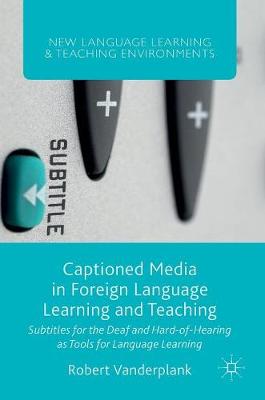
E-raamat: Captioned Media in Foreign Language Learning and Teaching: Subtitles for the Deaf and Hard-of-Hearing as Tools for Language Learning

  • Formaat - PDF+DRM
  • Hind: 28,39 €*
  • * hind on lõplik, st. muud allahindlused enam ei rakendu
  • Lisa ostukorvi
  • Lisa soovinimekirja
  • See e-raamat on mõeldud ainult isiklikuks kasutamiseks. E-raamatuid ei saa tagastada.

DRM piirangud

  • Kopeerimine (copy/paste):

    ei ole lubatud

  • Printimine:

    ei ole lubatud

  • Kasutamine:

    Digitaalõiguste kaitse (DRM)
    Kirjastus on väljastanud selle e-raamatu krüpteeritud kujul, mis tähendab, et selle lugemiseks peate installeerima spetsiaalse tarkvara. Samuti peate looma endale  Adobe ID Rohkem infot siin. E-raamatut saab lugeda 1 kasutaja ning alla laadida kuni 6'de seadmesse (kõik autoriseeritud sama Adobe ID-ga).

    Vajalik tarkvara
    Mobiilsetes seadmetes (telefon või tahvelarvuti) lugemiseks peate installeerima selle tasuta rakenduse: PocketBook Reader (iOS / Android)

    PC või Mac seadmes lugemiseks peate installima Adobe Digital Editionsi (Seeon tasuta rakendus spetsiaalselt e-raamatute lugemiseks. Seda ei tohi segamini ajada Adober Reader'iga, mis tõenäoliselt on juba teie arvutisse installeeritud )

    Seda e-raamatut ei saa lugeda Amazon Kindle's. 

This book brings together current thinking on informal language learning and the findings of over 30 years of research on captions (same language subtitles for the deaf and hard-of-hearing) to present a new model of language learning from captioned viewing and a future roadmap for research and practice in this field. Language learners may have normal hearing but they are ‘hard-of-listening’ and find it difficult to follow the rapid or unclear speech in many films and TV programmes. Vanderplank considers whether watching with captions not only enables learners to understand and enjoy foreign language television and films but also helps them to improve their foreign language skills.Captioned Media in Foreign Language Learning and Teaching will be of interest to students and researchers involved in second language acquisition teaching and research, as well as practising language teachers and teacher trainers.

Arvustused

This book addresses a much debated topic in the research on foreign language teaching and learning: the role of captioned audiovisuals for educational purposes. The book can also offer valuable insights to independent learners who wish to study or practice foreign languages by means of captioned multimedia tools. (Annamaria Caimi, TESOL Quarterly, November, 2017)

I found the book very informative, well organised, and easy to read. Vanderplank's work remains fresh and relevant, and the volume will be of great interest to students and researchers interested in L2 learning, as well as practicing language teachers and teacher trainees. (Danijela Trenkic, System, Vol. 65, April, 2017)

1 Introduction
1(6)
2 Some Essential Themes in Building the Case for Captions in Language Learning
7(36)
3 The Value of Closed Captions and Teletext Subtitles for Language Learning
43(32)
4 The State of the Art I: Selected Research on Listening Comprehension and Vocabulary Acquisition
75(30)
5 The State of the Art II: Selected Research on Other Issues in Watching Captioned TV, Films and Video
105(44)
6 Focus on Genres: The Practical Uses and Limitations of Different Types of Programmes
149(38)
7 The EURECAP Project
187(36)
8 The Developing Environment for Language Learning: A New Audience and the Revised Model of Language Learning with Captions
223(22)
9 Conclusion
245(6)
References 251(14)
Index 265
Robert Vanderplank is Director of Oxford University Language Centre and a Fellow of Kellogg College, Oxford, where he is also Director of the Kellogg College Centre for the Study of Lifelong Language Learning and maintains the LARA database on language attrition research (www.lara.ox.ac.uk). His research interests and publications include television and language learning, listening comprehension, learner strategies, language testing and assessment, language maintenance and attrition, and learner autonomy.