Muutke küpsiste eelistusi

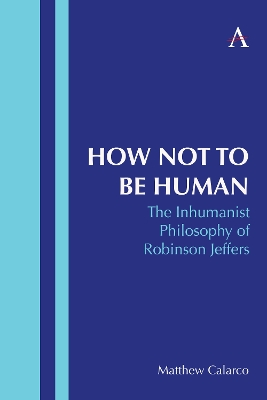
E-raamat: How Not to Be Human: The Inhumanist Philosophy of Robinson Jeffers

  • Formaat: EPUB+DRM
  • Ilmumisaeg: 09-Jul-2024
  • Kirjastus: Anthem Press
  • Keel: eng
  • ISBN-13: 9781839990403
  • Formaat - EPUB+DRM
  • Hind: 32,50 €*
  • * hind on lõplik, st. muud allahindlused enam ei rakendu
  • Lisa ostukorvi
  • Lisa soovinimekirja
  • See e-raamat on mõeldud ainult isiklikuks kasutamiseks. E-raamatuid ei saa tagastada.
  • Formaat: EPUB+DRM
  • Ilmumisaeg: 09-Jul-2024
  • Kirjastus: Anthem Press
  • Keel: eng
  • ISBN-13: 9781839990403

DRM piirangud

  • Kopeerimine (copy/paste):

    ei ole lubatud

  • Printimine:

    ei ole lubatud

  • Kasutamine:

    Digitaalõiguste kaitse (DRM)
    Kirjastus on väljastanud selle e-raamatu krüpteeritud kujul, mis tähendab, et selle lugemiseks peate installeerima spetsiaalse tarkvara. Samuti peate looma endale  Adobe ID Rohkem infot siin. E-raamatut saab lugeda 1 kasutaja ning alla laadida kuni 6'de seadmesse (kõik autoriseeritud sama Adobe ID-ga).

    Vajalik tarkvara
    Mobiilsetes seadmetes (telefon või tahvelarvuti) lugemiseks peate installeerima selle tasuta rakenduse: PocketBook Reader (iOS / Android)

    PC või Mac seadmes lugemiseks peate installima Adobe Digital Editionsi (Seeon tasuta rakendus spetsiaalselt e-raamatute lugemiseks. Seda ei tohi segamini ajada Adober Reader'iga, mis tõenäoliselt on juba teie arvutisse installeeritud )

    Seda e-raamatut ei saa lugeda Amazon Kindle's. 

This book presents an analysis of the poet Robinson Jeffers in view of his contributions to recent debates about the status of “the human” and the development of an inhumanist philosophy.


Current debates in the environmental humanities, animal studies, and related fields increasingly revolve around this question: What to do with “the human”? Is the human a category worth preserving? Should it be replaced with the post-human? Should marginalized and minoritarian groups advocate for a universal humanism? What is the relationship between humanism and anthropocentrism? Is a genuinely non-anthropocentric mode of thinking and living possible for human beings?
This book argues that the writings of twentieth-century poet Robinson Jeffers offer twenty-first-century readers a number of crucial insights concerning such questions and timely advice about how not to be human. For Jeffers, our tendency to turn inward on ourselves and to indulge in human narcissism is at the heart of the social, economic, and existential ills that plague modern societies. As a remedy, Jeffers recommends turning ourselves outward—beyond the self and beyond the human—and learning to affirm and even love the inhuman cosmos in all of its terrible beauty. In articulating this vision of “inhumanism,” Jeffers develops a full-orbed and radical non-anthropocentrism that stretches across ethical, political, ontological, and aesthetic registers. In the process, Jeffers helps us find our way back to ourselves, but this time no longer as “human” in the traditional sense but as plain members of the inhuman world. With his inhumanist philosophy and poetics, Jeffers not only anticipates the most pressing questions and cutting-edge debates of our present moment but also challenges us to reconsider some of the key dogmas that underpin familiar discourses surrounding the Anthropocene and posthumanist philosophies and ecopoetics.

Current debates in the environmental humanities, animal studies, and related fields increasingly revolve around this question: What to do with “the human”? Is the human a category worth preserving? Should it be replaced with the post-human? Should marginalized and minoritarian groups advocate for a universal humanism? What is the relationship between humanism and anthropocentrism? Is a genuinely non-anthropocentric mode of thinking and living possible for human beings? This book argues that the writings of twentieth-century poet Robinson Jeffers offer twenty-first-century readers a number of crucial insights concerning such questions and timely advice about how not to be human. For Jeffers, our tendency to turn inward on ourselves and to indulge in human narcissism is at the heart of the social, economic, and existential ills that plague modern societies. As a remedy, Jeffers recommends turning ourselves outward—beyond the self and beyond the human—and learning to affirm and even love the inhuman cosmos in all of its terrible beauty. In the process, Jeffers helps us find our way back to ourselves, but this time no longer as “human” in the traditional sense but as plain members of the inhuman world.

Arvustused

The book is appropriately cautious in pointing out ambiguities and potential dangers, and it also offers the reader a good sample of Jeffer's poetry. Jeffers's rewriting of Greek tragedies may be of special interest here. CHOICE Lucid and reader-friendly yet imbued with philosophical gravitas, Matthew Calarco has written the perfect accompaniment to a growing twenty-first-century awareness of the poetry of Robinson Jeffers. Calarco shows that at the compassionate heart of Jefferss radical inhumanism is a bold demand, not just to understand the inhuman, but to learn to love it. Jeff Wallace, Professor Emeritus, Cardiff Metropolitan University, and author of Abstraction in Modernism and Modernity: Human and Inhuman (2023)  Matthew Calarcos How Not to Be Human is a timely conversation about what matters mostthe individuals relationship to society and humans relationship to the more-thanhuman cosmos. Calarco invigorates Robinson Jefferss work with a philosophical vitality for our times. Dr. Ron Broglio, Arizona State University Calarcos book is exciting, intriguing, and invigorating. The structuring of the book through the five major thematic linesevil/theodicy, saviors, cosmos, humans, and valuesworked really well and is a blessing and a gift to the reader. Jessica Pierce, Faculty Affiliate with the Center for Bioethics and Humanities, University of Colorado Anschutz Medical Campus

Muu info

Argues that the writings of twentieth-century poet Robinson Jeffers offer twenty-first-century readers a number of crucial insights concerning such questions as how not to be human.

Introduction; 1 Evil; 2 Saviors; 3 Cosmos; 4 Humanity; 5 Value; 6 Beauty
Matthew Calarco is Professor of Philosophy at California State University, Fullerton.