Muutke küpsiste eelistusi

E-raamat: King Alfred the Great, his Hagiographers and his Cult: A Childhood Remembered

  • Formaat: EPUB+DRM
  • Sari: Hagiography Beyond Tradition
  • Ilmumisaeg: 01-Oct-2025
  • Kirjastus: Amsterdam University Press
  • Keel: eng
  • ISBN-13: 9781040794371
  • Formaat - EPUB+DRM
  • Hind: 59,79 €*
  • * hind on lõplik, st. muud allahindlused enam ei rakendu
  • Lisa ostukorvi
  • Lisa soovinimekirja
  • See e-raamat on mõeldud ainult isiklikuks kasutamiseks. E-raamatuid ei saa tagastada.
  • Formaat: EPUB+DRM
  • Sari: Hagiography Beyond Tradition
  • Ilmumisaeg: 01-Oct-2025
  • Kirjastus: Amsterdam University Press
  • Keel: eng
  • ISBN-13: 9781040794371

DRM piirangud

  • Kopeerimine (copy/paste):

    ei ole lubatud

  • Printimine:

    ei ole lubatud

  • Kasutamine:

    Digitaalõiguste kaitse (DRM)
    Kirjastus on väljastanud selle e-raamatu krüpteeritud kujul, mis tähendab, et selle lugemiseks peate installeerima spetsiaalse tarkvara. Samuti peate looma endale  Adobe ID Rohkem infot siin. E-raamatut saab lugeda 1 kasutaja ning alla laadida kuni 6'de seadmesse (kõik autoriseeritud sama Adobe ID-ga).

    Vajalik tarkvara
    Mobiilsetes seadmetes (telefon või tahvelarvuti) lugemiseks peate installeerima selle tasuta rakenduse: PocketBook Reader (iOS / Android)

    PC või Mac seadmes lugemiseks peate installima Adobe Digital Editionsi (Seeon tasuta rakendus spetsiaalselt e-raamatute lugemiseks. Seda ei tohi segamini ajada Adober Reader'iga, mis tõenäoliselt on juba teie arvutisse installeeritud )

    Seda e-raamatut ei saa lugeda Amazon Kindle's. 

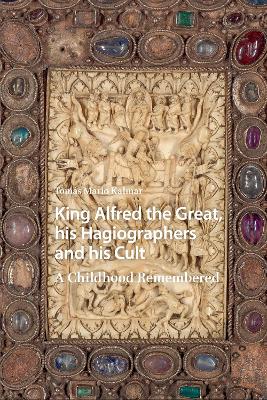
This book situates Alfred the Great in his hagiographic context. For 150 years, the fables told in the ninth century about Alfreds childhood have posed interlocking disciplinary challenges to historians committed to evicting romance from history. Blending current Hagiography Studies with historical, literary, and biblical hermeneutics can help us forgo the anti-hagiographic commitments which motivated the scholars who purified the Victorian cult of Alfred by expunging his legends and salvaging his historicity. The book focusses on the typological functions of three Alfredian fables from the Old English Chronicle, the Old English Boethius, and Assers Vita Ælfredi, analyses the plot common to all three, critiques the psychological conjecture that Alfreds childhood memory was their common source, and shows that synoptically they can help us see how Alfred shaped the curve of his own lifes destiny and how he engaged in the formation of his own cult to last a thousand years.

Arvustused

"Stripped of Victorian reliquarianism, Alfred emerges from Kalmar's analysis as a more complex and more rounded person, one whose childhood experiences profoundly shaped his adult career. This is an engaging, entertaining, and highly perceptive study of a great early English king and of the fashioning of his cult, especially in the nineteenth century." - Sarah Foot, The Catholic Historical Review, 111, Winter 2025

"Kalmar's prose, packed with intellectual jests and provocations, serves as an invitation to rethink what we know about the past. The text critically maps the various trends of historiographical and hagiographical construction that have contributed to Alfred's legacy as both a real and mythologized monarch ...This book does more than recount the life of a king; it questions the very fabric of historiographical narrative construction, making it a significant contribution to the studies of historiography and medievalism." -Tarren Andrews, Speculum , 100/1, January, 2025.

Kalmars reading of Assers Life of King Alfred is original, personal, and engaging as befits the nature of the work itself. He captures the chemistry between an extraordinary king and the Welsh priest who entered into his service. Enjoy the ride! Professor Simon Keynes, University of Cambridge

A breathtaking endeavor, challenging, wide-ranging, and lovingly crafted, with conclusions good enough to be true. The author excels in drawing harmony from textual dissonance. Alfred and Asser will never be the same, nor will readers of this extraordinary book. Roberta Frank, Yale University

Tomás Kalmars willingness to read and think about virtually everything ever written about King Alfred turns what might have been a well-informed useful work on the long afterlife of Alfreds life and reign, and Assers Life of Alfred, into an excitingly dense microcosm of the genesis of British national identity over a thousand years. He traces a bedrock of historical fact morphing into national myth not only in schoolbook stories but championed by intellectuals and academics equally committed to their own true Alfred, hero and exemplar of the nation. Kalmar uses his original trope of Victorian reliquarianism to hold together medieval and modern emotional investments in the idea of Alfred, a true modern fetish for secular salvation, a religion of nation and empire. Built on exhaustive research, scrupulous close reading, and precise careful argumentation, Kalmars book makes scholarship enormously fun to read it has narrative propulsion told in an appealingly direct authorial voice. Historical erudition, medievalist and modern, is rarely this compellingly interesting, rarely so frankly entertaining on subjects of continuing importance. Nancy Partner, McGill University

An unusual take on Englands king who burnt the cakes but became the British Empires saint. Kalmar asks simple questions about King Alfred, offering thoughtful answers that will keep readers engrossed, chuckling, and even make them laugh out loud. Professor Jane Roberts, Emeritus Professor of English Language and Medieval Literature, University of London

Tomas Kalmars quest is to find the real Alfred in Assers vita. This not, however, a work of historical criticism in a traditional vein, but a skillful, immensely erudite, and sparklingly written exploration of the meanings of a classic hagiographical text. John W. Coakley, Feakes Professor of Church History, Emeritus, New Brunswick Theological Seminary

Foreword 9(6)
Acknowledgments 15(4)
I Cult and Canon: The Chronicle
Some Key Dates: 1849--1904
19(6)
1 Kiss the Reliquary
25(44)
Victorian reliquarianism
27(4)
The death of Alfred
31(9)
The birth of Alfred
40(10)
A relic of Alfred
50(19)
2 Remember the Pope
69(26)
Hagiography
70(8)
Chronology
78(4)
Psychology
82(13)
3 Fix the Date
95(66)
Harmony from dissonance
96(6)
From Rome to Athelney
102(12)
The Infidel vs The Believer
114(20)
Stubbs' Gambit
134(7)
Plummer's blind spot
141(20)
II Too Good to be True: The Life
4 Write the Life
161(38)
Respect
162(12)
Allusion
174(6)
Plagiarism
180(6)
Echoes
186(4)
Cliches
190(3)
Irony
193(6)
5 Win the Book
199(32)
Transcendental flotsam and jetsam
200(4)
Redaction criticism
204(4)
The Poem Itself.
208(10)
Et legit
218(7)
Appendix A Six translations of Race for the Book
225(6)
III The Curve of Destiny: The Works
6 Cross the Border
231(26)
The Pope and the Book
232(1)
Leyere et interpretari simul
233(12)
From Bonifatian to Alfredian biliteracy
245(1)
A game of figures
246(5)
Typo logic interne
251(6)
7 Win the Crown
257(24)
Race for the crown
262(5)
Commentary
267(5)
When I was young
272(5)
Scylla and Charybdis
277(3)
Envoi
280(1)
Bibliography 281(22)
Index 303
An independent Latino scholar living in Vermont, Tomás Kalmar (Ed.D., Harvard) specializes in interdisciplinary Alfredian Studies. He has published on Alfred and Asser in EOLAS and Peritia. He is the author of Illegal Alphabets and Adult Biliteracy (Routledge 2015). Andrew Prescott (FSA, FRHS) is Professor of Digital Humanities at the University of Glasgow. Alicia Spencer-Hall is an Honorary Senior Research Fellow at University College London. Their research interests include: medieval hagiography, disability, gender, digital culture, and film and media studies. Her first monograph, Medieval Saints and Modern Screens: Divine Visions as Cinematic Experience was published by Amsterdam University Press in 2018, and is now available Open Access. Trans and Genderqueer Subjects in Medieval Hagiography, a collection co-edited with Blake Gutt, was published in 2021. Shortlisted for the Transgender Non-Fiction award at the 34th Lambda Literary Awards, the volume is now also available Open Access. Their second monograph, Medieval Twitter, was published by Arc Humanities Press in 2024.