Muutke küpsiste eelistusi

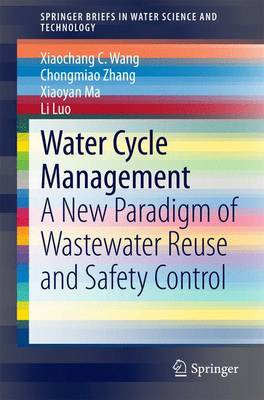
E-raamat: Water Cycle Management: A New Paradigm of Wastewater Reuse and Safety Control

  • Formaat - PDF+DRM
  • Hind: 55,56 €*
  • * hind on lõplik, st. muud allahindlused enam ei rakendu
  • Lisa ostukorvi
  • Lisa soovinimekirja
  • See e-raamat on mõeldud ainult isiklikuks kasutamiseks. E-raamatuid ei saa tagastada.

DRM piirangud

  • Kopeerimine (copy/paste):

    ei ole lubatud

  • Printimine:

    ei ole lubatud

  • Kasutamine:

    Digitaalõiguste kaitse (DRM)
    Kirjastus on väljastanud selle e-raamatu krüpteeritud kujul, mis tähendab, et selle lugemiseks peate installeerima spetsiaalse tarkvara. Samuti peate looma endale  Adobe ID Rohkem infot siin. E-raamatut saab lugeda 1 kasutaja ning alla laadida kuni 6'de seadmesse (kõik autoriseeritud sama Adobe ID-ga).

    Vajalik tarkvara
    Mobiilsetes seadmetes (telefon või tahvelarvuti) lugemiseks peate installeerima selle tasuta rakenduse: PocketBook Reader (iOS / Android)

    PC või Mac seadmes lugemiseks peate installima Adobe Digital Editionsi (Seeon tasuta rakendus spetsiaalselt e-raamatute lugemiseks. Seda ei tohi segamini ajada Adober Reader'iga, mis tõenäoliselt on juba teie arvutisse installeeritud )

    Seda e-raamatut ei saa lugeda Amazon Kindle's. 

This book focuses on environmental engineering, and on wastewater treatment and reuse in particular, which is a vital aspect for countries and regions suffering from water shortages. It introduces a new water cycle management concept for designing water systems that mimic the hydrological cycle, where reclaimed water is produced, stored/regulated, supplied and used in a semi-natural manner so that its self-purification capacity and system efficiency can be maximized. To ensure safe water throughout the cycle, emphasis is placed on the control of ecological and pathogenic risks using a series of quality indices associated with bioassays and molecular biological analyses, as well as risk assessments focusing on protecting the environment and human health. Together with theoretical and technological discussions, a real case of a district water system for maximizing water circulation and reuse by means of a sophisticated water cycle is presented. This book introduces readers to essential new concepts and practices and illustrates the future perspectives offered by a new paradigm for design and safety control in the context of wastewater reuse systems.

1 Introduction
1(6)
References
4(3)
2 Concepts of Water Cycle Management for Water Reuse System Design
7(22)
2.1 Natural Hydrological Cycle
7(6)
2.1.1 Global Hydrological Cycle
7(2)
2.1.2 Hydrological Cycle of a Watershed
9(1)
2.1.3 Functions of the Hydrological Cycle
10(3)
2.2 Urban/District Water Cycle
13(6)
2.2.1 Human Disturbance of the Hydrological Cycle
13(1)
2.2.2 Conventional Urban Water System: The Old Paradigm
14(2)
2.2.3 Healthy Urban/District Water Cycle Design: The New Paradigm
16(3)
2.3 Conceptual Models
19(10)
2.3.1 Models of Urban/District Water Cycle with Wastewater as a Resource
19(1)
2.3.2 Quantitative Models
20(4)
2.3.3 Materials Balance Models
24(2)
References
26(3)
3 Safety Control of Reclaimed Water Use
29(46)
3.1 Risks Associated with Reclaimed Water Use
29(7)
3.1.1 Pollutants Possibly Existing in Reclaimed Water
29(4)
3.1.2 Ecological and Human Health Risks Associated with Water Reuse
33(2)
3.1.3 Methods for Ecological and Human Health Risks Assessment
35(1)
3.2 Ecological Risk Assessment and Safety Control
36(14)
3.2.1 Risk Identification
36(3)
3.2.2 Ecological Risk Assessment Tool: Bioassays
39(5)
3.2.3 Bioassay for Safety Control of Water Reuse
44(6)
3.3 Pathogenic Risk Assessment and Safety Control
50(25)
3.3.1 Risk Identification: Pathogens and Their Harmful Effects on Human Health
50(6)
3.3.2 Fecal Indicators Related to Pathogens
56(3)
3.3.3 Risk Assessment and Comparison for Water Reuse
59(6)
References
65(10)
4 A Real Case of Water Reuse Through a Water Cycle
75(20)
4.1 Case Description
75(4)
4.1.1 Background of the Project
75(3)
4.1.2 Project Outline
78(1)
4.2 System Design and Implementation
79(8)
4.2.1 Water Demand and Availability
79(2)
4.2.2 System Design
81(1)
4.2.3 Process Selection for Water Treatment/Reclamation
82(4)
4.2.4 Landscaping Lake in the Water Cycle
86(1)
4.3 Effects of Water Reuse Through a Water Cycle
87(8)
4.3.1 Water Source Augmentation
87(2)
4.3.2 Water Quality Aspects
89(3)
4.3.3 Social and Environmental Benefits
92(1)
References
93(2)
5 Future Perspectives
95(3)
References 98
Professor Xiaochang C. Wang received his PhD from Hokkaido University, Japan in 1992. Since then he has been devoted in many national and international research projects covering water and wastewater treatment, water reuse, and urban water environmental protection, especially for water deficient regions such as northwestern China. He is active internationally and serves in International Water Association (IWA) as member of Program Committee, Steering Committee of Cities of the Future Program, Chair of Alternative Water Resources Cluster-China Chapter. He received the IWA Global Project Innovation Award in 2012 and due to his international contributions he was nominated IWA Fellow in 2011 and IWA Distinguished Fellow in 2014.